

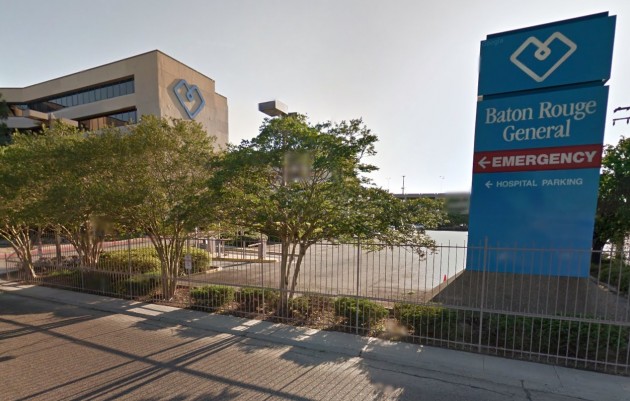
When Baton Rouge General announced in March 2015 it would close its Mid City emergency room, hospital officials cited monthly losses of some $2 million as the main reason for their controversial decision.
So the hospital’s announcement earlier today that it plans to permanently reopen the ER—which since early April has been providing COVID-19 care for the state on a temporary basis—raises the question: What has changed in five years to make operating the ER financially sustainable?
Medicaid expansion, says BRG President and CEO Edgardo Tenreiro. In 2015, uninsured patients accounted for roughly 20% of BRG’s payer mix. Today, they comprise fewer than 10%.
“Not only was the increase in patients covered by Medicaid but changes to the Medicaid model,” Tenreiro says. “It is shifting to a dollar-follow-the-patient model, which is what we had been saying for 10 years needed to happen. It’s a credit to the Legislature and Gov. Edwards that we were able to move to this model.”
In the relatively short term, the hospital’s deal with the state to provide care to COVID-19 patients is also helping make the ER opening possible. BRG’s contract with the state totals roughly $8 million, Tenreiro says, part of which has gone to cover such critical costs as equipping and outfitting the facility to once again provide care to the community.
In the long term, it’s too soon to say whether BRG will make money, lose money or break even on the deal.
“We think it is going to be roughly break even but we won’t know for sure,” says Tenreiro, who estimates the ER will need to see between 20 and 30 patients per day to make the deal work. “My board was asking me the same question. I told them we’re going to have to take the risk.”
Reopening the ER could be the first step toward returning the Mid City hospital to a full-service, acute care provider. In the years since the closure of the ER, which served as the feeder for the hospital’s inpatient admissions, the Mid City campus has continued to provide certain specialty services like rehab, behavioral, hospice and outpatient care. But it doesn’t have an operating room and cannot, therefore, provide a full complement of care.
For now, the types of care the ER can provide will also be limited. The 33-bed facility will assess and triage. Some patients will be transferred to Baton Rouge General’s Bluebonnet campus. Others—a severe gunshot wound, for instance—would likely be transferred to Our Lady of the Lake. Those who can be treated in Mid City will stay and, depending on their condition, be admitted.
“In terms of internal medicine, we have already done that and are able to provide care for those patients,” he says. “In terms of more specialized care, this could be the first step. Time will tell. The key is going to be what type of patients we get, what type of specialty physician care we will be able to bring in and can we make the finances balance.”
The decision, coming in the midst of a pandemic that has underscored the disparity in health outcomes, is particularly timely, says Tenreiro, who hopes the Mid City campus will be a catalyst for redevelopment along the Florida Boulevard corridor.
‘I think this is going to work and that we will not recognize this area of town two or three years from now,” he says. “People want to do something about economic and health disparities. We’re at the center of that. If you want to do something, this is one option for you as a person interested in solving this problem and we are proud that our board took this step and this risk and we’ll see where it takes us.”
[polldaddy poll=10565972]
