

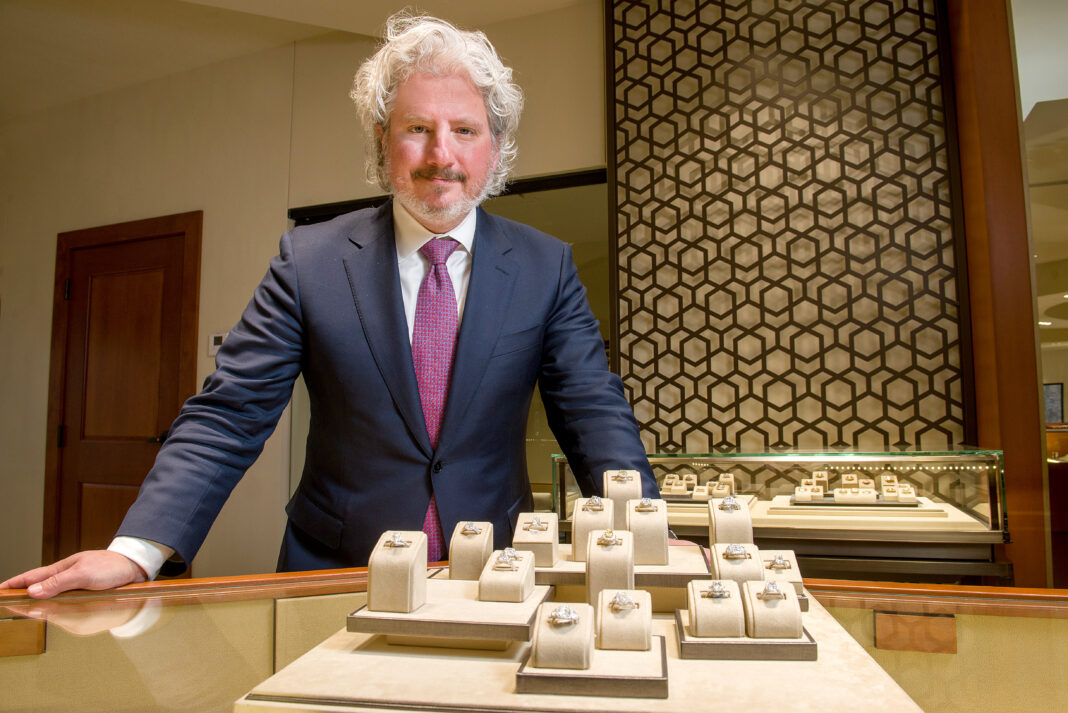
When purchasing a diamond, there are many questions to ask yourself.
Before the 2000s, diamond buyers mainly had to consider the cut, color, clarity and cost (also known as the four “C”s). But once scientists perfected commercial quality lab diamonds and they were recognized by the Federal Trade Commission as real diamonds, customers had to make an additional choice: lab-grown or natural diamonds.
Since their introduction, lab-grown diamonds have shaken up the global jewelry industry. As they’ve become easier for scientists to make and have gone down in price for buyers, the market for lab-grown diamonds has grown exponentially.
In Baton Rouge, as across the globe, jewelry retailers and manufacturers are seeing more and more customers requesting lab-grown diamonds, especially for engagement rings.
But while some jewelers and customers appreciate the accessibility lab-grown diamonds provide, others believe there is still misinformation surrounding them and there should be a clearer differentiation between the two.
Natural diamonds and lab-grown diamonds are visually, chemically and physically the same. The key differences between the two are how they are made, the story behind them, the cost and perceived value.
“There’s sort of a romance there with natural stones,” says Elgin’s Fine Jewelry Vice President Lee Elgin. “They’re mined and they’ve been around for a long time. There’s a degree of certainty to them. It’s hard to say if lab diamonds are a fad or if they’ll stick around.”
DOES LOWER COST MEAN LOWER VALUE?
Lab-grown diamonds are sold at a fraction of the price of mined diamonds. For years, large diamonds were purchased mainly by the rich and famous. Now with lab diamonds, the average person can get a nearly 2 carat lab-grown diamond for a little over $1,000, compared to a natural diamond that can cost almost $5,000 for the same size, according to diamond industry analyst Paul Zimnisky.
One-third of engagement rings in 2022 were sold with lab diamonds as the center stone, according to wedding planning website The Knot. So if more people are purchasing lab-grown diamonds for their engagement rings, does that mean jewelers are making less money from engagement ring sales? Michael Sigler, store manager at Adler’s in Metairie, says yes.
“I think we’re losing money because the average engagement ring sale is a lot less,” Sigler says. “You may be able to recover that in volume, but I do think sales are going down a little bit. I’ve never seen something drop in value so fast as the lab diamonds. The factories are making more than what the demand is. They overproduced the product.”
Adler’s started selling lab-grown diamonds in 2022 after getting requests from their customers. Sigler says there has always been an alternative to diamonds such as moissanite and cubic zirconia, but this is the first time he has seen a non-earth diamond actually compete with natural diamonds.
Local jewelers say customers under the age of 30 are more likely to purchase lab-grown diamonds.
“Older people like to stick with natural diamonds, that’s what they know,” Elgin says. “Initially, it was about being ethically sourced and environmentally friendly. Now, most people make their choice based on affordability. The prices of lab-grown diamonds continue to come down.”
While many jewelers have adapted to the recent demand of lab-grown diamonds, others have stayed true to only selling natural diamonds. Scott Berg, owner and co-president of Lee Michaels Fine Jewelry, says the company doesn’t feel lab-grown diamonds are currently being represented to the consumer clearly.
“If you bought a lab-grown diamond five years ago and you looked at it today, I guarantee you that it is significantly worth less today if you wanted to go replace it,” Berg says. “We don’t feel comfortable that the value at the retail store has not come down to where it is from the manufacturer. Retailers are making enormous profits from selling [lab-grown diamonds]. Our core values say we’re in it for the long run and we’re never going to take short-term profits that are detrimental to the long-term game.”
ETHICALLY SOURCED AND ECO-FRIENDLY
Many retailers and consumers, however, see lab-grown diamonds as an eco-friendly and ethically sourced alternative to natural diamonds. Natural diamonds have a history of being associated with conflict diamonds (also known as blood diamonds), which are diamonds mined in a war zone often by forced labor and sold to fund armed rebel movements.
Though conflict diamonds have been a global issue in the past, Berg says that Lee Michaels abides by the Kimberley Process and only partners with communities in Africa that ethically source diamonds. The Kimberley Process Certification Scheme, a global initiative launched in 2003, was designed to control and monitor the trade of rough diamonds and prevent the shipment and sale of conflict diamonds, according to the National Museum of American Diplomacy.
The environmental and ethical impact of diamonds is a hot topic for both natural and lab-grown diamonds. Lab diamonds require a large amount of heat and energy to create gemstones that imitate the same intense process that forms natural diamonds.
“For the most part, these man-made diamonds are being created in China and India in large warehouses,” Berg says.
“You need this immense amount of power to create a lab-grown diamond. They’re using coal to create the power because that’s typically been the source. They haven’t switched as quickly to other energy sources because they probably don’t have the resources to. The blanket claim [that lab-grown diamonds are more eco-friendly] can be very inaccurate.”
THE FUTURE OF DIAMONDS
Louisiana jewelers may not share the same stance on lab and natural diamonds, but they do share the common belief that the type of diamond someone wants to buy is their choice.
“We made the decision to add lab diamonds in 2016,” says Harold Dupuy, vice president of Stuller, a fine-jewelry manufacturer in Lafayette. “We’ve got a big natural business, but we came to the conclusion that it’s a consumer’s choice. It was a legitimate product and as long as you fully disclose what it is, it’s the consumer’s choice and we shouldn’t be the one dictating what the consumer buys.”
The final decision may be in the customer’s hands, but with clearer definitions of what separates a lab-grown from a natural diamond and a fair pricing scale, some local jewelers believe that customers will feel more confident and sure about their diamond purchases.
“Lab-grown diamonds are sold on the same scale as a natural diamond,” Berg says. “That scale has been transferred to man-made diamonds and they are not as rare as the natural diamond. Therefore, that scale should not be used.”
Dupuy predicts that lab-grown and natural diamonds will eventually separate into two distinct markets and the gap in price will be so extreme that consumers will lean one way or the other. He also predicts that it will be less common for lab-grown diamonds to be used for engagement rings and will be used more in fashion jewelry.
“Lab-grown diamonds have a bright future in quantum computing and semi-conductor space,” Dupuy says. “The future of lab-grown is more on the industrial side. The [man-made diamond] growers started in the jewelry industry, but decades from now the jewelry side will be small compared to some of the more advanced scientific applications [of diamonds].”
LAB VS. NATURAL
Natural diamonds are formed deep below the earth’s surface over 1 billion to 3.3 billion years. Each diamond extracted from the earth is like a snowflake, no two are identical. They come in a variety of colors and clarity based on natural circumstances like heat and pressure. This method of harvesting the fruit of the earth after billions of years makes natural diamonds a rare luxury.
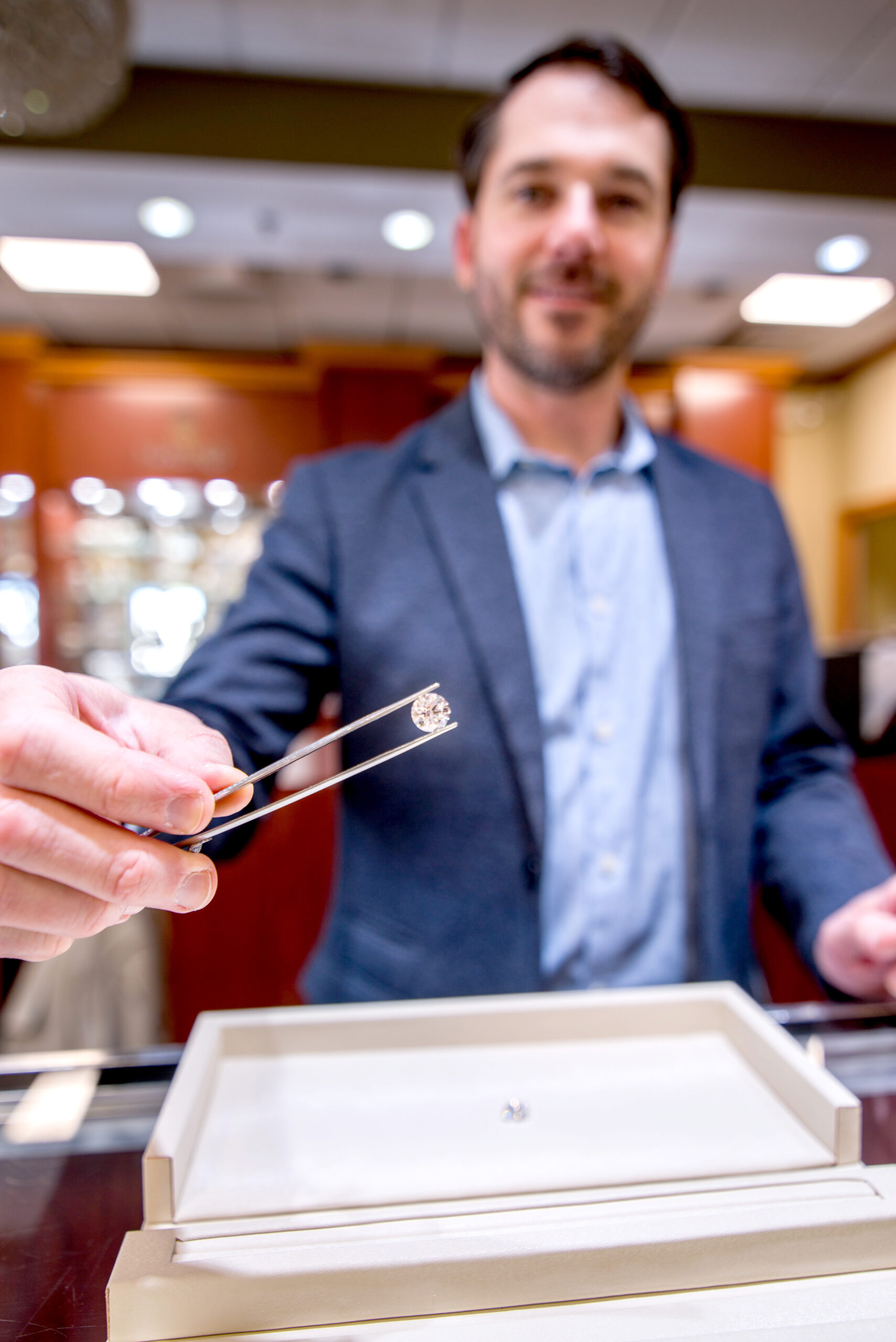
Humans, however, have discovered a way to expedite nature’s process through science. Natural diamonds can take just days or weeks to grow in a lab, depending on the desired size and quality of the stone, according to the International Gem Society.
The most common method used to create gem-quality lab diamonds is known as chemical vapor deposition, or CVD. This process creates diamonds by filling a chamber with a mixture of gasses, adding a substrate like a thin sliver of diamond seed or graphite and then heating the chamber under extremely high temperatures. Dozens of stones can be grown at the same time and different treatments can be used to create colorless diamonds or unique colored diamonds like pink, red, blue or yellow.
