
In her recent column entitled “The futility of community dialogue,” Business Report Editor Stephanie Riegel offers a strikingly pessimistic prediction for race relations after the imminent announcement in the Alton Sterling shooting investigation. For Riegel, discussions around race have been hopelessly one sided. In her view, it is permissible to talk about racial bias in policing, but not about the underlying issues behind high crime in low-income neighborhoods. Those issues, she implies, include “teenage birthrates” and “absentee fathers.” She states that these two factors “condemn so many young people and their offspring to lives of generational poverty.”
Sadly, far too many agree with Riegel’s deductions. They view them as a set of “hard truths” that “political correctness” has relegated to the margins of debate. The belief that individual choices are the primary drivers of persistent, inter-generational black poverty is nothing new. It has its origins in the “culture of poverty” thesis. Many—white and black—view black communities as merely a concentration of people who are culturally and biologically predisposed to making poor life choices. The idea of black communities as sites of mass pathology predates emancipation. Despite having built the nation for free, formerly enslaved black people were widely regarded as inherently criminal, immoral and lazy.
By invoking “teenage birthrates” and “absentee fathers,” Riegel seeks to link back to the long, sordid history of casting black communities in moral or cultural decline as a defense against the struggle for equality, equity and justice. Her point is cunningly simple: If black people would just make better choices, racial disparities would disappear.
The “culture of poverty” thesis is both factually and normatively bankrupt. Factually, there is no causal relationship between out-of-wedlock births or absentee fathers and black poverty. Problems with family structure are a result of the chaos and trauma of racialized poverty, not the root cause. They are often the unfortunate, but understandable, response of individuals and families who have endured generations of state-sanctioned and popularly supported social exclusion, political marginalization, economic exploitation and terrorism.
Normatively, Riegel’s logic is even more insidious. When black people die under circumstances similar to Sterling’s, many look for the usual scapegoats to justify their resignation and indifference. “Where are the fathers?” they ask. “I wish he didn’t have a criminal record,” they lament. But past transgressions or family structure should not impair black folks’ ability to access fair and impartial justice. Black worthiness of Constitutional protections such as due process must never be conditioned on how others view black folks’ life choices. To assert otherwise is to suggest that black people occupy a conditional citizenship or, even worse, a conditional humanity.
If we want to have a frank discussion about the roots of black poverty, we should start with demonstrable evidence as opposed to recycled stereotypes. There is ample data chronicling the relationship between Jim Crow and black poverty. There is a growing amount of data on how redlining and federal housing policies subsidized generations of white wealth creation while simultaneously creating black ghettos. Because of historic wage theft and employment discrimination, black men and women still earn a fraction of their white counterparts. Moreover, decades of over-policing, over-charging, over-sentencing and over-incarceration have separated far too many fathers and mothers from their families.
Economists have long tracked how cumulative racial disadvantage is inter-generationally transferred. In fact, the think tank Demos recently released a study on the racial wealth gap entitled “The Asset Value of Whiteness.” Their statistical analysis illustrates that structural factors—not individual choices—drive ever-widening racial wealth disparities. A 2013 Centers for Disease Control study found that black fathers are more involved in the lives of their children than their white counterparts. I could go on. There are simply reams of data debunking Riegel’s tortured misconceptions.
This is not some “popular narrative” as Riegel dismissively suggests. Its American history 101. That is why most of us who grew up with our fathers and married before having children see ourselves in Alton, Trayvon, Tamir, and Sandra. Yet after repeatedly telling our stories and citing the mountains of easily accessible data verifying the permanence of institutional racism, we too often hear the same tired “culture of poverty” distortions.
And it is in those times that, like Riegel, we also wonder if further discussion is futile.
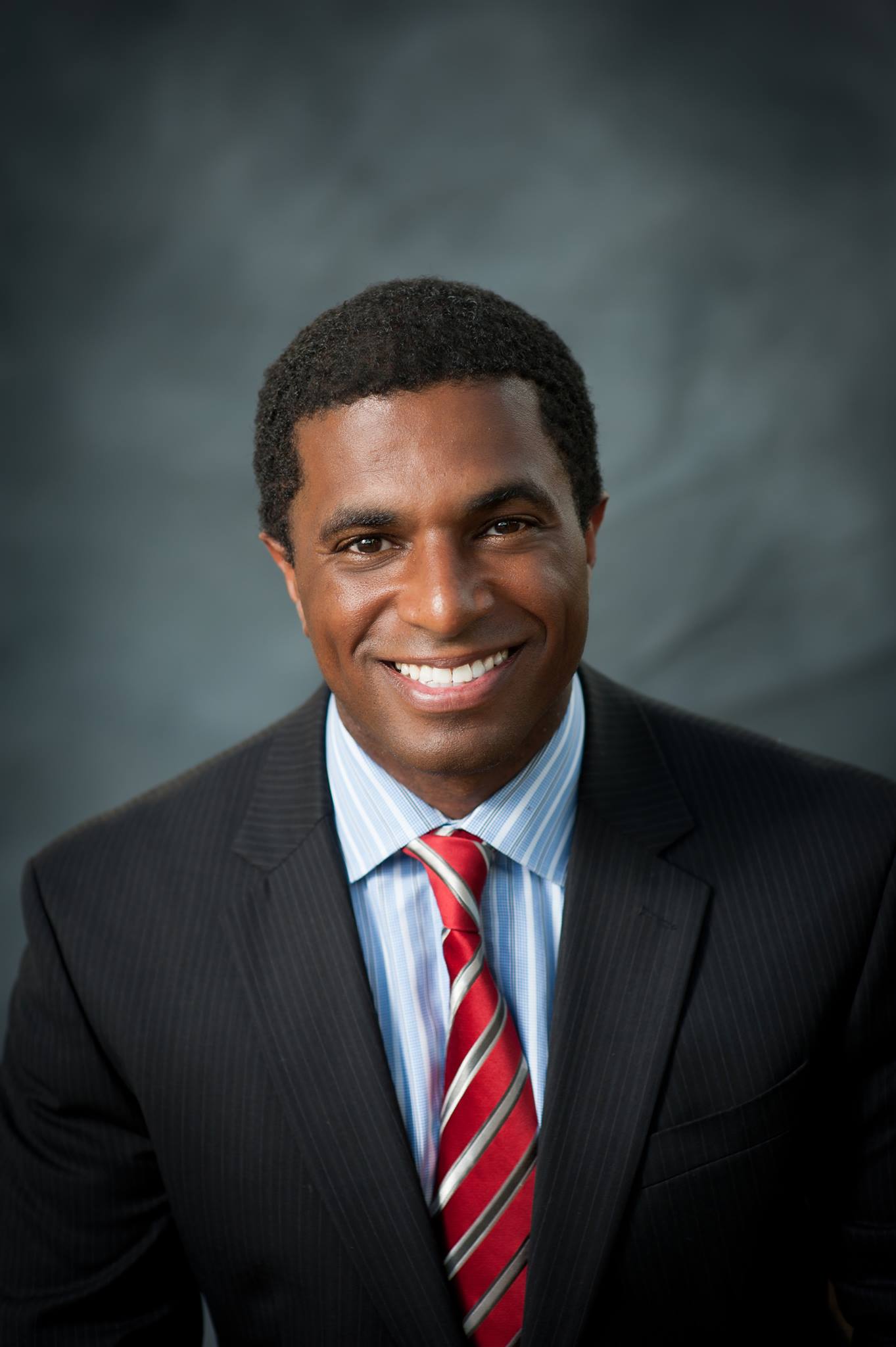
Christopher J. Tyson is the Newman Trowbridge Distinguished Associate Professor of Law at the LSU Law Center.
