Sponsored by ExxonMobil Baton Rouge
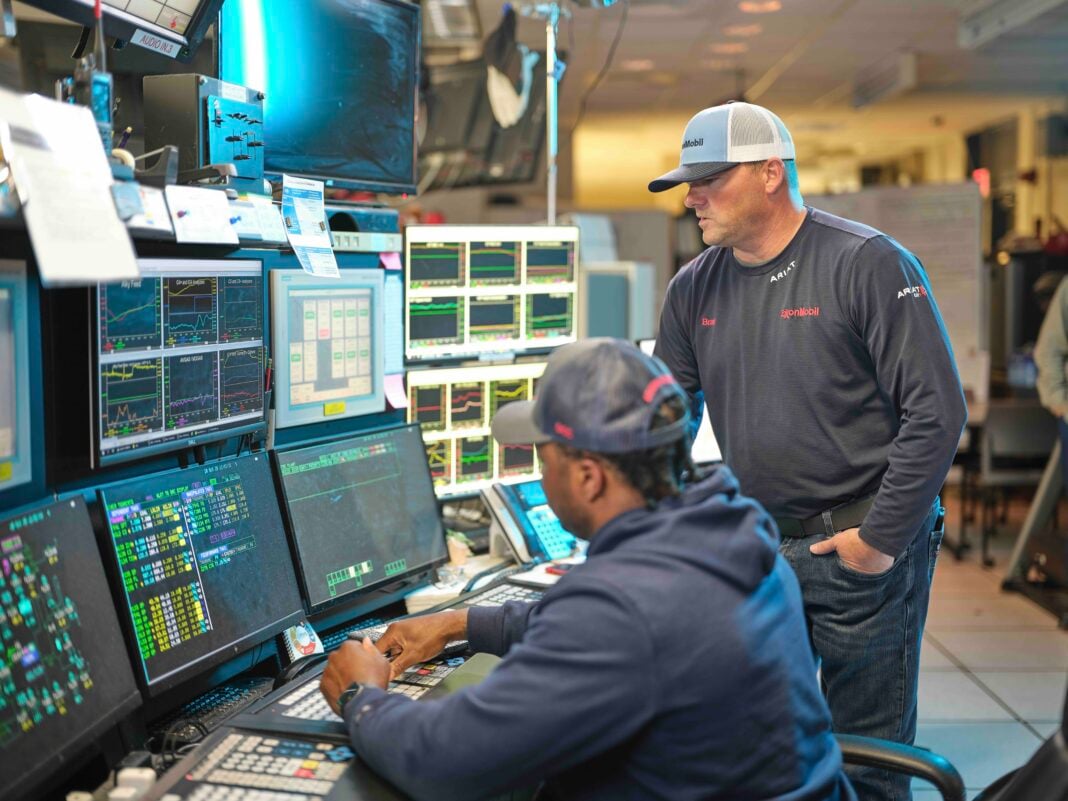
When equipment needs troubleshooting or a process requires immediate attention, skilled tradespeople play a critical role in keeping industrial operations running safely. Their work calls for technical knowledge, sound judgment and the ability to earn the trust of the people who depend on them.
Thousands of skilled craftspeople and technicians support Louisiana’s industrial workforce, helping provide the products, energy and infrastructure that communities rely on every day. At ExxonMobil’s Baton Rouge operations, electricians Mitchell Johnson and Mark Glorioso, analyzer technician Daniel Cannon and laboratory technician Alcinda Bell bring different skills to that shared responsibility.
With more than 18 years at ExxonMobil, Bell tests diesel, gases and lubricants and shares results that help guide operating decisions.
“We all need each other at the end of the day, and we learn from each other as well,” Bell said. Her experience spans process operations, supervision and now laboratory work, illustrating how technical skills can carry over into new roles.
Bell also values the strong relationships she has built throughout her career in fields where women have historically been underrepresented. She sees opportunities to introduce young people, particularly girls, to technical careers as an important way to expand their view of what is possible.
As a member of ExxonMobil’s Women’s Interest Network (WIN), she participates in efforts such as Introduce a Girl to Engineering Day, which exposes young girls to STEM careers. “It broadens their horizon and lets them know that there are other things out there to do,” Bell says. “And to watch those kids learn different things and to work with each other, it’s just amazing.”
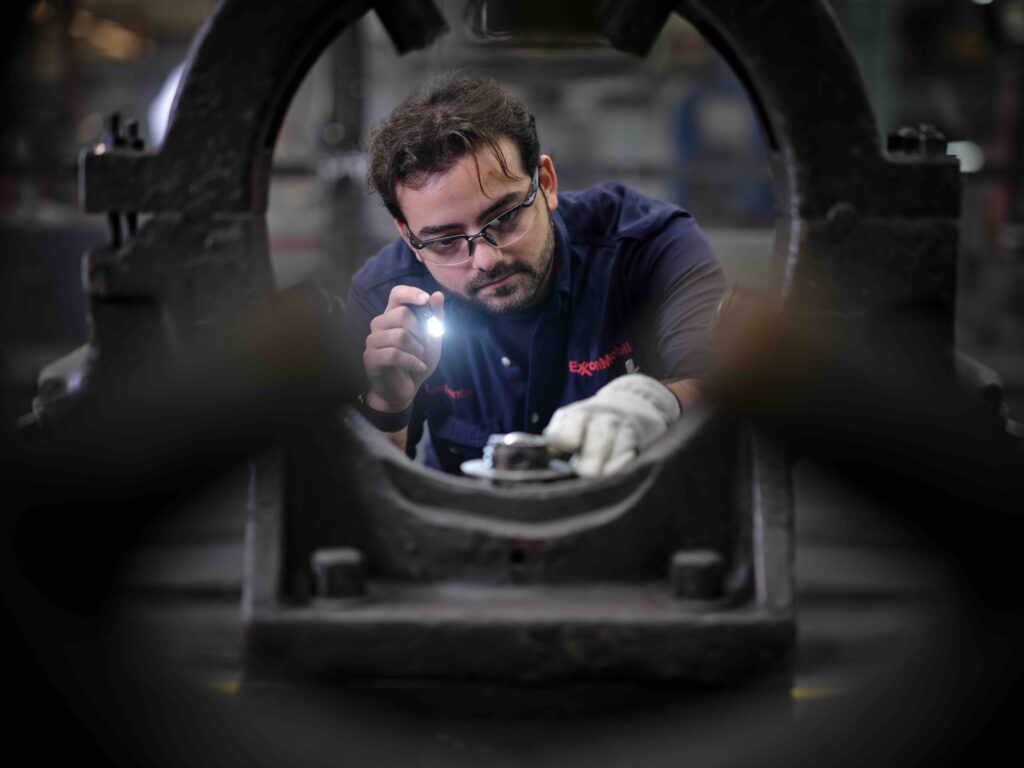
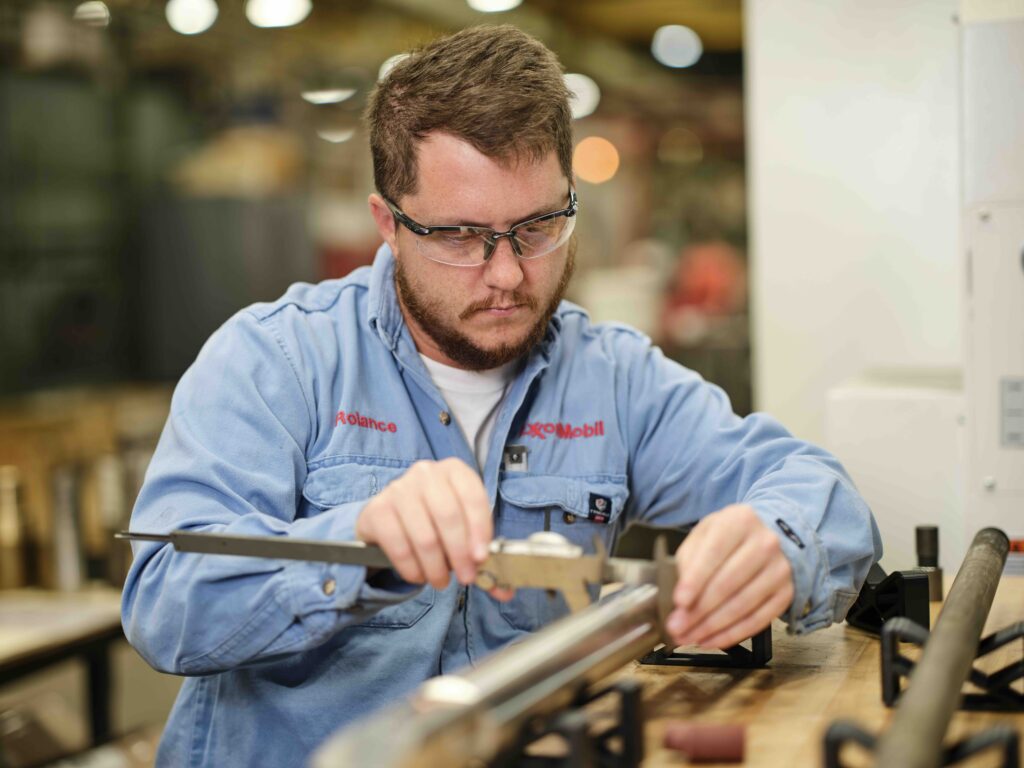
For Johnson, who has worked in the electrical trade for 28 years, the career path started with family encouragement. His father, who worked as a contractor at ExxonMobil, suggested he pursue electrical work as a dependable way to build a career. Today, Johnson helps maintain refinery equipment and troubleshoot issues that could affect operations.
“Electricity is something that you can’t really see,” he says. “The only thing you see from it is the cause and effect.” Understanding what is happening behind the scenes is especially important when equipment issues threaten to disrupt a unit’s operations.
Glorioso, who has spent 16 years in the electrical trade, sees that impact in his daily work, whether evaluating a motor or repairing a motor-operated valve. The trust built through those interactions is one of the most rewarding parts of the job.
“When a pump won’t start, or a motor-operated valve won’t open or close properly, it can have a significant impact on the unit,” Glorioso says. “Being able to troubleshoot the problem, fix it efficiently and know that the equipment is operating safely is an important part of the job.”
That responsibility extends beyond electrical work. Cannon, an analyzer technician, maintains equipment that measures gases and other substances released during refinery processes. Accurate readings help teams monitor performance and verify compliance with environmental requirements.
For those considering their next step after high school, the trades can offer a path to a rewarding career without following a traditional four-year college route. Glorioso says he had a scholarship to the University of New Orleans but chose an electrical apprenticeship after seeing how the trade allowed his uncle to support his family and find work in different places.
“There’s not anything wrong or shameful with choosing a trade,” he says. “All of them can provide a very, very good life for you and for your family.”
Cannon echoed that message, noting that career paths can evolve as people gain experience and discover new interests. For him and his colleagues, the work offers opportunities to keep learning while contributing to something larger than any one job.
Across their different roles, these employees share a common purpose: applying their skills, learning from one another and helping keep operations safe and reliable. It is work that requires preparation and teamwork while making a meaningful impact every day.
For Johnson, one of the greatest rewards is building a career he takes pride in while remaining close to home. “This facility allows us to make a really good living and to stay in Louisiana, which is not something everyone gets to do,” he says. “I’m grateful to have had the opportunity to build my career right here at home.”