


In a city where LSU athletics is practically a religion, Southern University commands a fiercely loyal fanbase, and the New Orleans’ Saints and Pelicans are just a short drive away, Baton Rouge lives and breathes sports. And that’s before you factor in the booming world of youth leagues, travel ball, and school athletics.
It’s no surprise, then, that sports-related business opportunities flourish here—from local success stories like Marucci Sports to the expanding Walk-On’s Sports Bistreaux franchise. The region’s passion for athletics has also given rise to another booming industry: sports medicine. A quick Google search for “sports medicine Baton Rouge” yields pages of results, with orthopedic surgeons, physical therapists and pain management clinics all vying for attention.
Lately, the competition has intensified. Major health care providers have made bold moves in the sports medicine space—launching new facilities and forging high-profile partnerships—and these ventures are reshaping the health care landscape in Baton Rouge.
High-stakes investments
Our Lady of the Lake Health, part of the Franciscan Missionaries of Our Lady Health System and a staple of Baton Rouge health care, has made headlines with its $85 million commitment to LSU athletics—part of a larger $170 million investment in the university. Media coverage highlights the impact of this partnership—new facilities like the Football Operations Recovery Center and advanced treatments including hyperbaric oxygen therapy and platelet-rich plasma injections.

But that’s not all. In late September, Our Lady of the Lake announced plans to build a $100 million sports medicine institute that would be next to the proposed new LSU arena. The institute, which hinges on the arena plans coming to fruition, would serve as a “one-stop shop” for athletes of all stripes, offering athletic training, imaging, orthopedics, physical therapy, education and research opportunities for LSU students and faculty and more, according to FMOLHS President and CEO E.J. Kuiper.
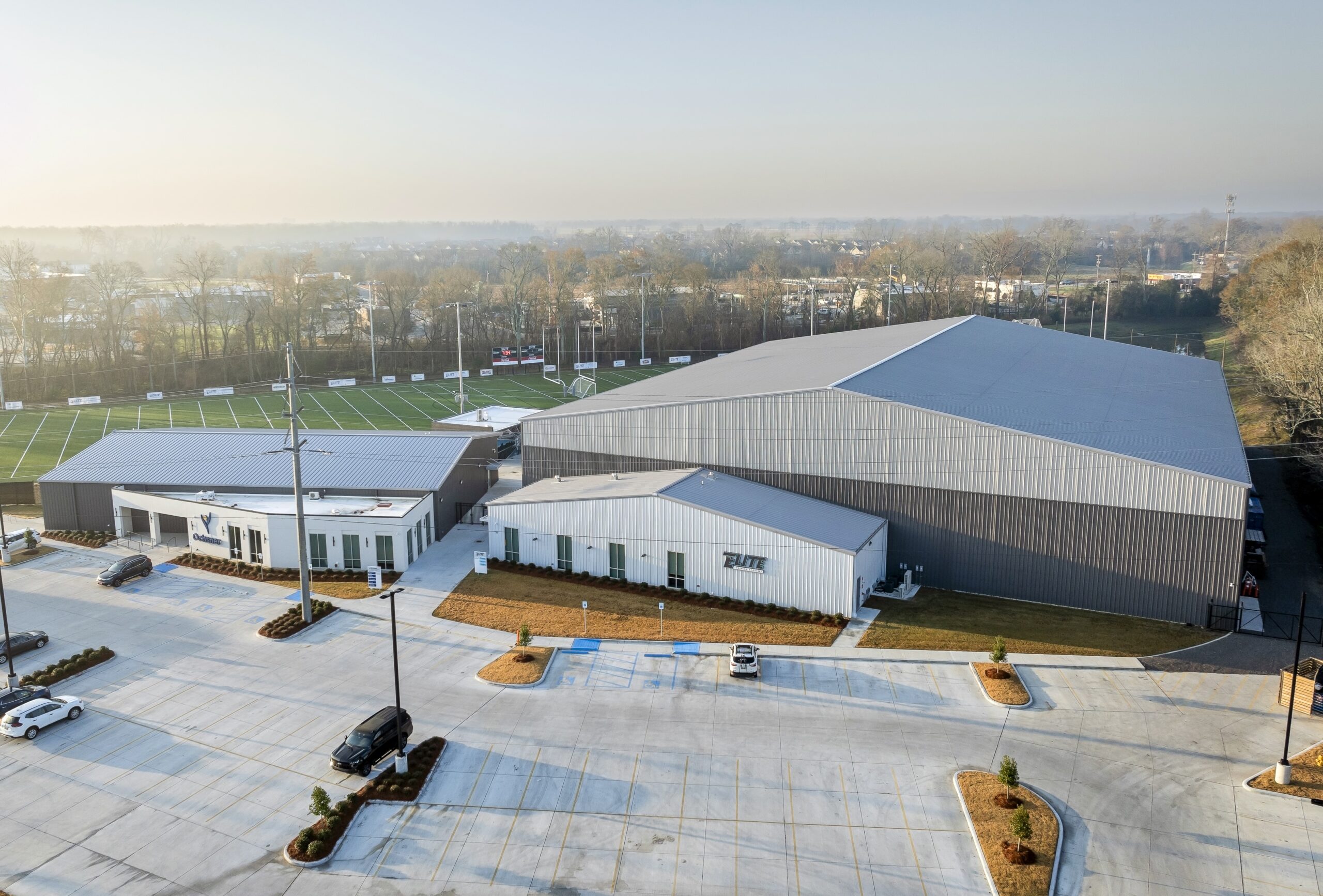
Meanwhile, Ochsner Health has staked its own claim with the development of the Ochsner Orthopedics and Sports Medicine Institute at Elite Training Complex – Burbank. This $22 million initiative—built in partnership with Elite Training Academy—reflects Ochsner’s ambition to become a regional sports medicine leader.
“Whether clients are working with sports psychologists, nutritionists, physical therapists or imaging specialists, this partnership allows us to bring together the best of the best,” says Ochsner Baton Rouge CEO Chuck Daigle.
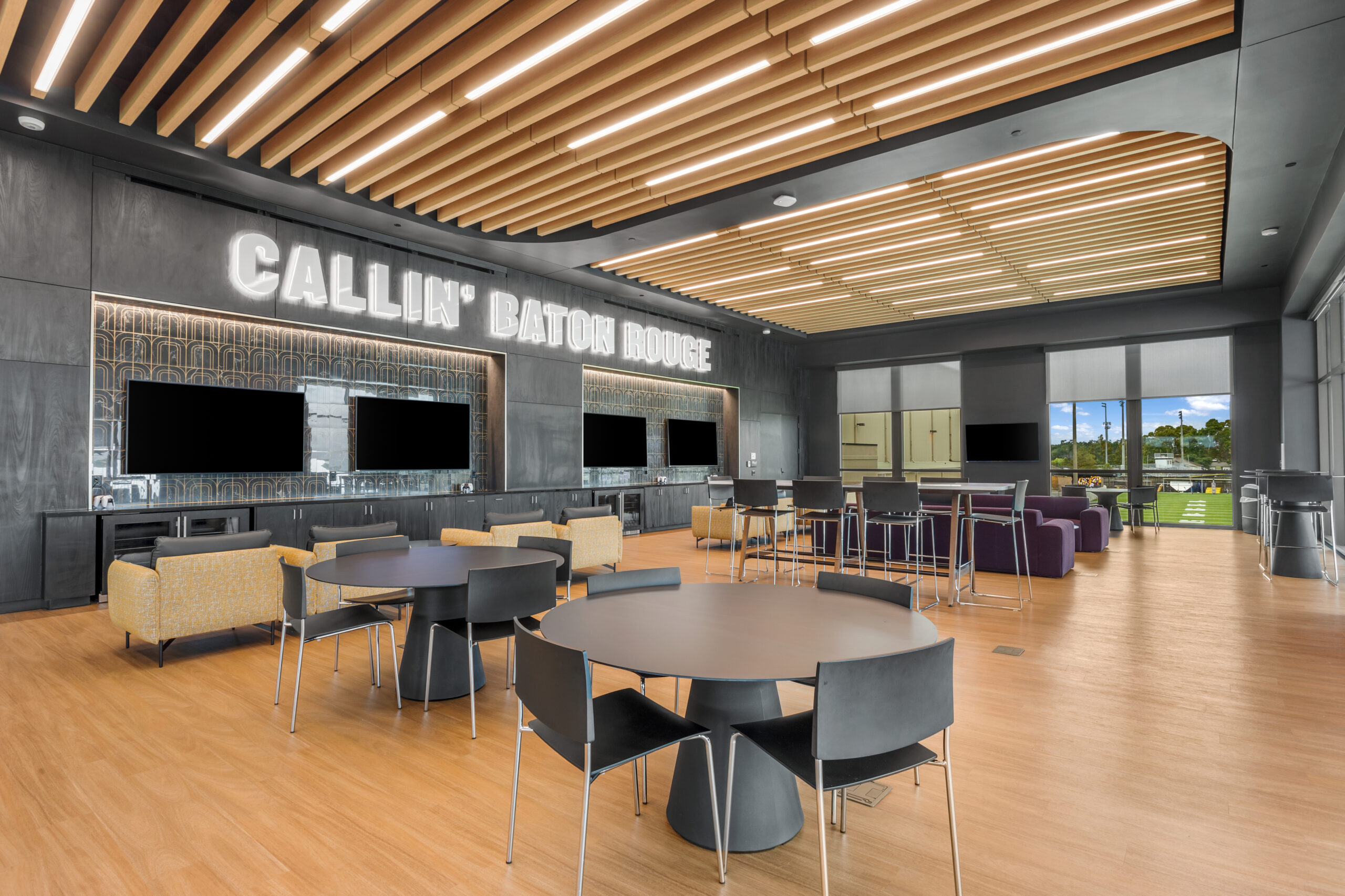 With two full-size outdoor turf fields, a 60-yard indoor turf field, cryotherapy, dry needling, and backing from elite athletes like Joe Burrow and Tyrann Mathieu, the Elite Training Complex is more than a facility—it’s a high-performance ecosystem. And it’s not just about prestige. Projects like these require significant ongoing investment—and offer serious potential returns, both in revenue and reputation.
Grassroots care
Not all players in Baton Rouge’s sports medicine scene wear the banner of a hospital system. The Baton Rouge Orthopaedic Clinic, or BROC, has carved out its own niche, serving as a longtime provider of orthopedic care and athletic training services in the region.
Marketing manager Kate Bradshaw and BROC Foundation Director Deanna Melancon, a certified athletic trainer, shared how their team has steadily expanded its footprint in the local sports community.
The BROC Foundation launched in 2013 with just five employees offering athletic training support to a handful of schools. Today, it employs 15 full-time and five part-time staffers, providing free sports medicine coverage to student-athletes at 30 high schools across Greater Baton Rouge.
“It’s critical to have trained sports medicine professionals on the sidelines to monitor everything from playing surfaces and weather to personal medical conditions like diabetes or sickle cell,” Melancon says. “That one-on-one attention has made a real difference in keeping kids safe.”
She notes that in Louisiana, preventing heat stroke and heat exhaustion during practice is just as important as treating in-game injuries. BROC trainers use specialized tools to measure true field temperature and help athletes adjust safely to the heat—especially during grueling summer workouts.
“Our goal is to partner with school coaches and trainers to implement strong injury prevention programs,” Melancon adds. “Our physicians not only donate time and money—they genuinely enjoy being part of these students’ journeys.”
BROC also plays a key role at the collegiate level, partnering with OLOL and LSU to provide orthopedic care for LSU and Southern University athletes. The clinic works closely with Baton Rouge General and LSU’s kinesiology and football programs as well.
Melancon sees these partnerships as vital to the clinic’s strength—and to its impact.
“I was in an OLOL sports medicine office recently with several trainers, and when someone asked about a doctor who wasn’t there, everyone had their cell number,” she says. “That kind of accessibility can save lives, especially in rural areas where calling 911 might take 30 to 45 minutes. These relationships matter.”
Changing competitive landscape
Asked whether the influx of large-scale sports medicine initiatives affects smaller clinics like BROC, Melancon emphasizes their continued commitment to independence and quality.
“We’re focused on high-level care—our doctors are incredibly specialized and have been treating families across generations, from West Baton Rouge to Hammond,” she says. “We’re proud that the kids we serve—regardless of income or ZIP code—get the same standard of care as LSU athletes.”
From a business perspective, some industry experts argue that these investments are as much about strategy as service. Sports medicine can serve as an entry point for broader health care marketing, helping providers build relationships with entire families that may translate into long-term patient loyalty.
Whatever the motivation, one thing is certain: Sports medicine in Baton Rouge is entering a new era—defined by innovation, investment and opportunity.
This story has been edited since its original publication to remove an inaccurate statement indicating that FMOLHS declined to comment. Business Report regrets the error.
