


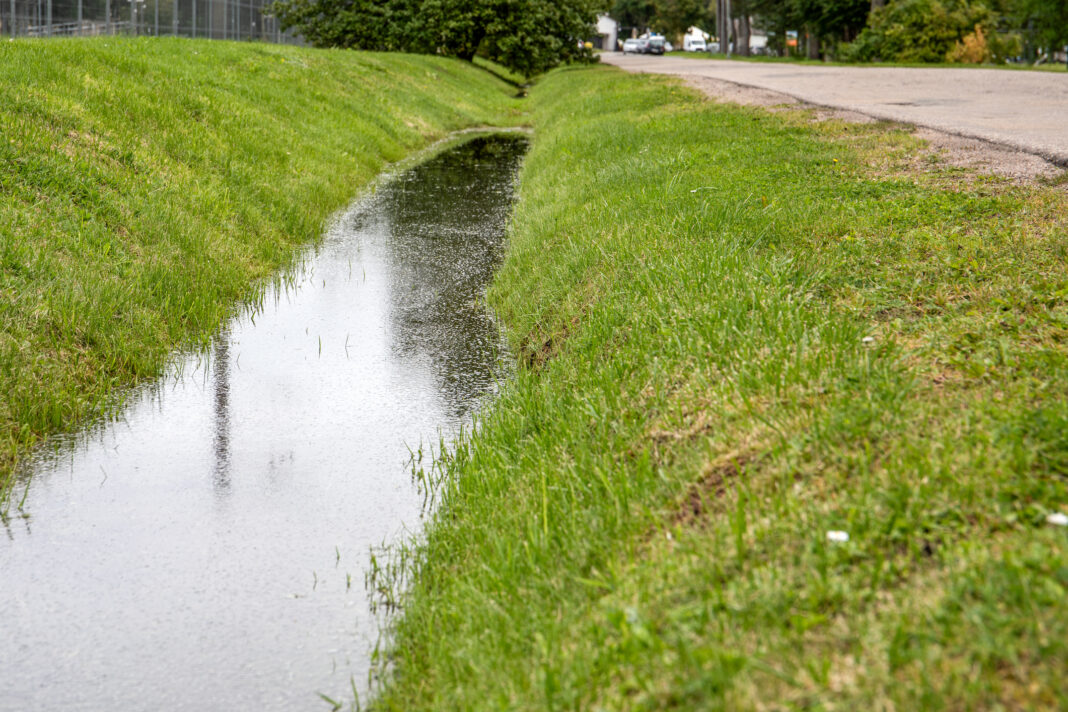
Ascension Parish could soon revise how it evaluates the drainage effects of new development, with proposed changes intended to formalize early reviews while giving parish engineers more discretion over what constitutes a meaningful flood impact.
The Ascension Parish Planning Commission recommended approval of two changes to the parish’s Offsite Drainage Assessment program during its meeting last week.
The ODA program requires new developments to demonstrate they will not increase flood risk to surrounding properties or infrastructure using the parish’s hydraulic models. Parish officials proposed four refinements to make the process more practical and efficient.
Commissioners opted to retain existing requirements that projects be analyzed against 10-, 25-, 50- and 100-year storm events instead of choosing to eliminate the 25- and 50-year storm events from standard ODA evaluations, leaving the 10- and 100-year events.
The commission rejected a proposal that would have allowed modeled water-surface increases of up to 1 inch around existing buildings and critical facilities and 2 inches in other areas. The existing standard essentially allows no increase.
Nicholas Miller raised concerns that allowing small increases could compound as additional developments are built, with each new drainage study establishing a new baseline.
“Eventually, you’re going to be three and four and five inches because there’s no baseline that goes back to it,” he said. “The new study is the baseline.”
The commission supported language giving parish engineers and the parish’s engineering review agency greater discretion to distinguish genuine flood impacts from modeling anomalies. The change would allow engineers to consider an impact’s location, extent and significance when determining whether mitigation is necessary.
Commissioners also backed formalizing drainage screening during the preliminary plat process. A full ODA could then be completed later during final design but would have to be finished before construction.
Long term, the changes could give developers earlier warning about drainage problems without requiring them to complete expensive engineering work before a project receives preliminary approval. Meanwhile, keeping the parish’s zero-increase standard preserves a stricter benchmark as development continues and drainage impacts accumulate.
The recommendations now move to the parish council for consideration.
