
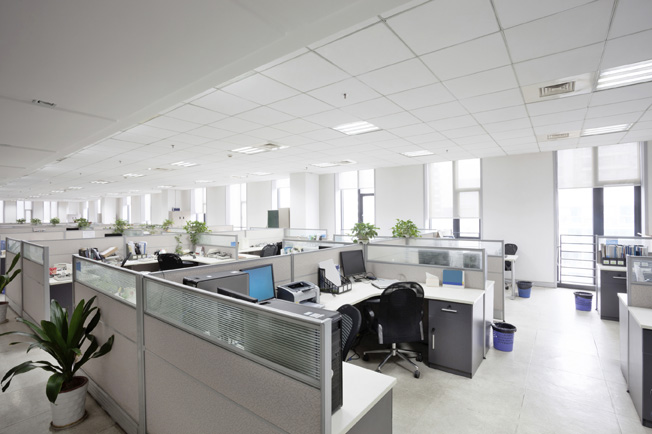
In 2009, the International Facility Management Association surveyed its members about the most common complaints they receive throughout the year. The most frequent gripe from office workers was that their office is too cold. The No. 2 complaint? Their office is too hot.
Building managers realize employee comfort affects productivity and job satisfaction, but many also want to save money on heating, cooling and powering their facilities. Striking the right balance for office energy efficiency often requires investment and patience, and, as the IFMA survey shows, it’s hard to make everyone happy.
“That’s the hardest thing about saving energy,” says Ray Shepherd, president of Facility Automation in Baton Rouge. “There’s always a tradeoff between how energy efficient you can really get and what’s going to keep your occupants comfortable.”

Controlling temperature, humidity and air flow isn’t the only way to save energy, of course, but it’s a big part of it. Greg Rosenbalm, who serves clients throughout the Gulf Coast region for Austin-based Syntergy, says utilities-based expenses comprise about 30% of a building’s operating cost, and about 60% of that is air conditioning, ventilation and lighting. So if you’re looking to save some money, those are good places to start.
Every building is different, so the problems, solutions and potential savings will vary. Consultants can help to put together a plan tailored to your facility, and we’ve provided some ideas here.
It may take a little trial and error to figure out what works best for you. But whatever you do, don’t expect to please everyone.
- If a light or appliance doesn’t need to be on, turn it off. This includes personal computers. Motion sensors can help ensure lights don’t stay on when no one’s around.
- Don’t skimp on maintenance for air conditioning, water and refrigeration systems.
- Take energy efficiency into account when it’s time to replace major appliances or equipment. Products with the Energy Star label have been tested for energy efficiency in EPA-certified laboratories.
- LED lights are efficient and can last for 15 or 20 years, but it can be expensive to replace all your bulbs at once. It might make more sense to replace your old bulbs as they die with more energy-efficient products.
- Many appliances still use electricity when they’re plugged in, even if they’re not being used. “Smart” power strips can alleviate this problem.
- Use fans to reduce the need for air conditioning in the summer and to pull warm air down from the ceiling in the winter.
- Improve insulation and plug leaks around windows and doors with weather-stripping or caulk.
- Don’t shut off the air conditioning or heat on nights and weekends if the office is closed, but adjust the thermostat accordingly. Some employers create a limited window–say, four hours on a Saturday–when temperature is kept at normal settings for employees who want to come in during off hours.
- Make sure radiators and air intake vents are not obstructed.
- Some buildings are all or nothing when it comes to air conditioning, which might be why that one seldom-used conference room in your office is always freezing. But systems are available that allow users to only heat or cool certain segments of the building when in use.
- If you have servers onsite, a dedicated cooling unit for that room may help prevent taxing the main system during off hours.
- People will have different ideas about what’s comfortable. But listen to employee complaints, because they could be indications that your system is overheating or overcooling certain areas.
- Some major appliances such as copiers can be put into a deep hibernation mode to avoid sucking too much power when not in use.
- Take advantage of outside light and temperature. For example, automated air dampers that control the flow of air between outside and inside can be set to open wide when the outside temperature and humidity drops below a certain level.
- Conversely, CO2 sensors mounted in the return air duct of the HVAC system can allow for dampers to be closed part of the time to reduce the amount of hot air being sucked in while still making sure the building gets enough fresh air.
- Windows can be tinted on one side to reduce heat from sunlight without drastically altering the appearance of the building.
- Utilities tend to have surcharges based on peak usage. Meters can be installed that track usage so adjustments can be made when the building reaches a certain threshold, such as offloading non-critical equipment or letting the temperature rise to 73 degrees when it’s normally kept at 70.
- Installing solar power can be expensive, and it can take quite a few years to see a return on that investment. If you’re considering solar, it might make sense to ensure sure your building is as energy efficient as possible first, so you don’t install more than you really need.
Sources include Syntergy, Facility Automation, EPA and the U.S. Small Business Administration
