 GET DAILY REPORT FREE



A decade ago, synthetic turf football fields were a luxury reserved for elite high schools and well-funded universities. Today, they’re rapidly becoming the standard across Louisiana and beyond, and one Baton Rouge-based engineering firm has positioned itself at the forefront of this transformation.
Simpson Sports Engineering, a licensed civil engineering firm owned by Jesse Simpson, has carved out a niche in designing and engineering synthetic turf athletic facilities. What began as occasional side projects has evolved into a business that’s doubling staff and expanding into new markets.
CONNECT WITH US
Top Executive: Jesse Simpson, Owner
Phone: 225.572.8852
Website: simpsonsportsengineering.com
The economics are compelling. Natural grass fields require constant upkeep, struggle with Louisiana’s unpredictable weather and limit how schools can use their facilities. Synthetic turf eliminates these constraints, allowing schools to host multiple activities without worrying about wear patterns or weather damage.
“At the high school level, it has almost become a necessity,” says Simpson, a former professional baseball pitcher who graduated from Zachary High School and played in the St. Louis Cardinals organization for four seasons from 2009 to 2012.
Simpson Sports Engineering’s business accelerated dramatically around 2022 when schools began prioritizing turf installations. The company recently completed a major project at Chappapeela Sports Park in Hammond and is now taking on an even larger project: a 20-field complex for the City of Minden, near Shreveport. It has also established a presence in the Alabama market with an office in Huntsville and plans to continue expanding across the Southeast.
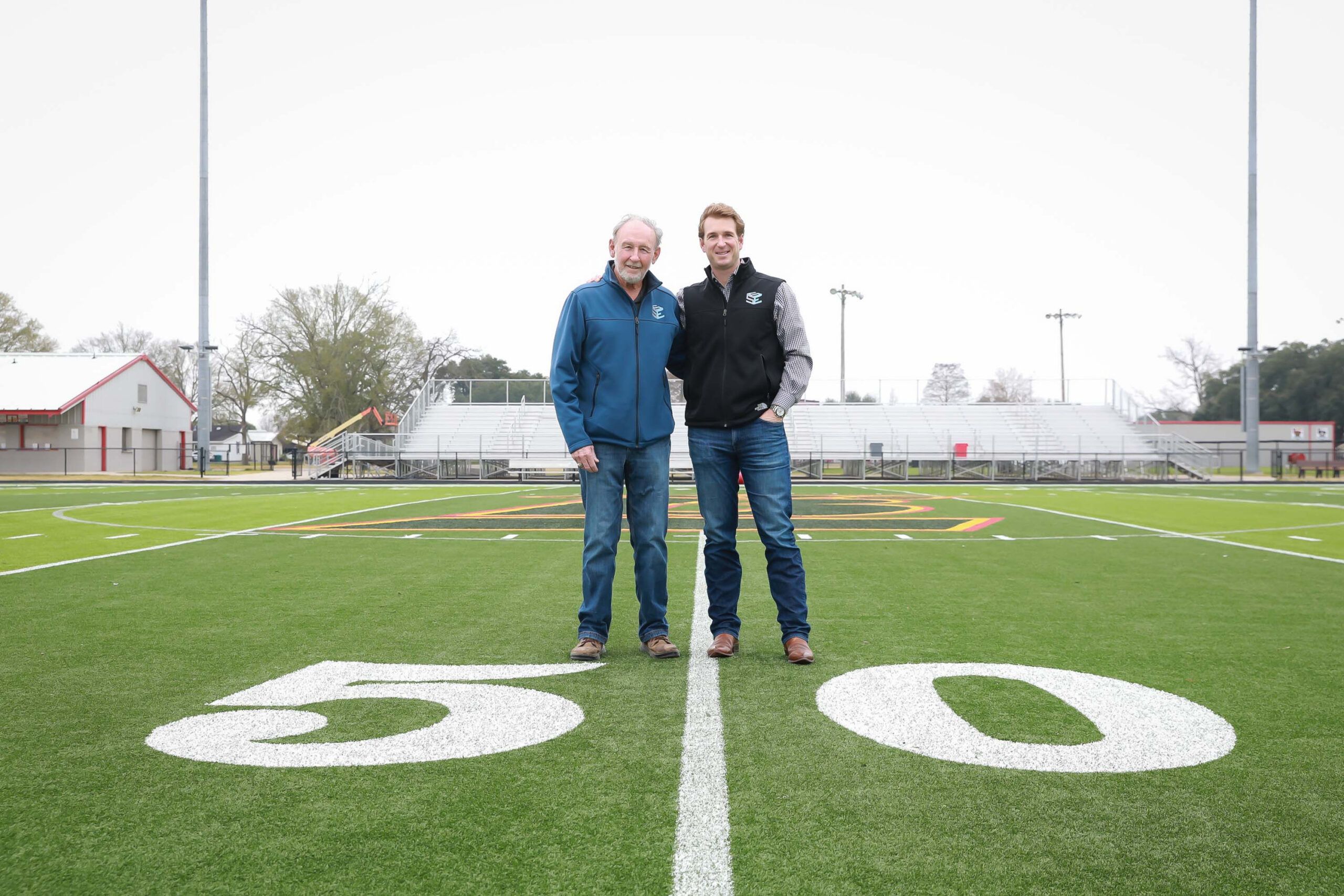 “These municipalities are picking up on this because of the economic impact it has to the cities,” Simpson says. “Soccer, baseball, football, travel ball—you might have 5,000 people at the park in a given weekend, and these families are staying at hotels and eating at local restaurants. The monetary boost and exposure is significant.”
Cities across the Southeast are increasingly calling Simpson Sports Engineering to design turf fields or multi-field complexes. The tax revenue from tournament weekends, combined with elevated property values near quality recreational facilities, makes these projects attractive investments.
While the turf itself gets the attention, Simpson emphasizes that proper engineering makes the difference between a field that lasts and one that fails prematurely. Louisiana’s challenging soil conditions require specialized expertise. “Louisiana has tricky soils at times,” he says. “A big piece of what we do is making sure the base work we’re calling for is correct.”
Simpson’s background as an athlete gives his firm a unique edge. “Having played on these fields, I’m able to understand the owner’s goal for their facility to ensure it is designed properly,” he says.