
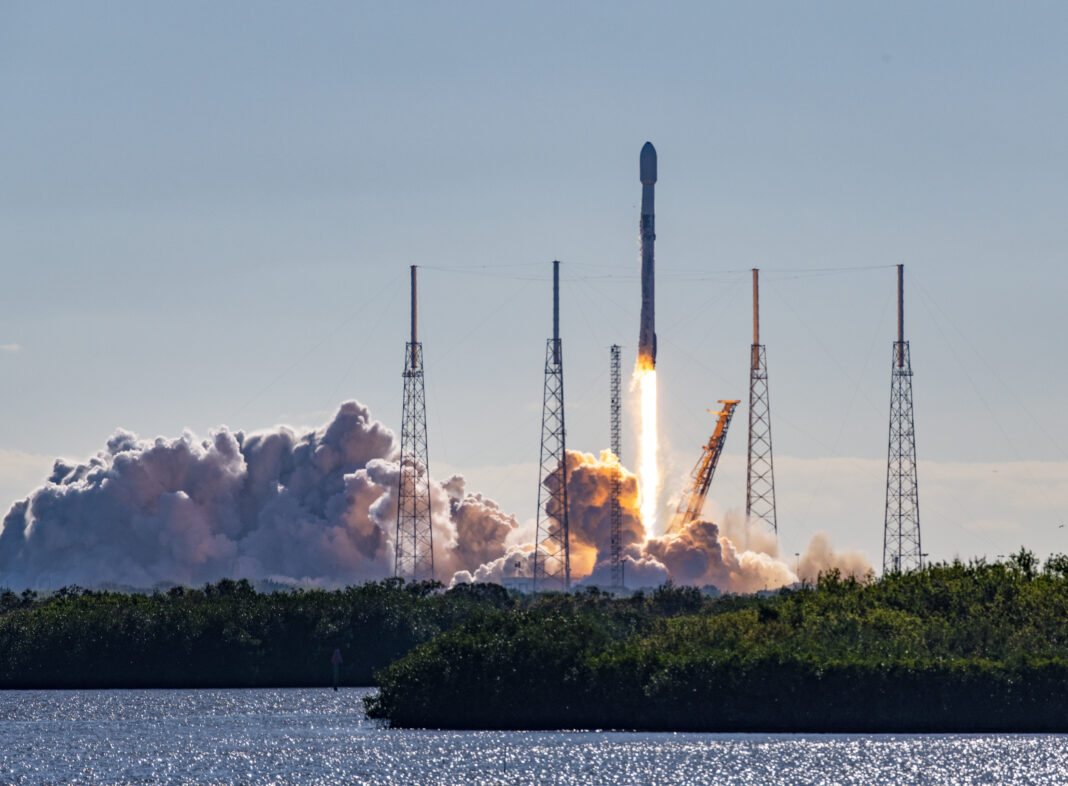
SpaceX’s massive Starship rocket reached orbit for the first time Monday morning, marking a major milestone for the program after an engine failure briefly put the mission at risk during ascent. Bloomberg reports.
Starship lifted off at 7:49 a.m. Central time from SpaceX’s Starbase launch facility in south Texas, beginning a test flight expected to last nearly 10 hours. The rocket carried 26 upgraded Starlink satellites, which it successfully deployed into orbit to join the company’s existing internet satellite network.
CFO Bret Johnsen has called the mission a “revenue-generating flight,” while CEO Elon Musk has said V3 satellites have more than 10 times the capability of V2 satellites and could drive a rapid increase in Starlink revenue. Starship also plays a central role in SpaceX’s broader ambitions, including potentially launching as many as 1 million satellites to serve as AI data centers in orbit and eventually supporting missions to the moon and Mars.
SpaceX is seeking to make Starship fully reusable by recovering both the booster and spacecraft. The booster has already been caught by the launch tower three times, while SpaceX plans to attempt catching the spacecraft for the first time on the 15th test flight.
During Monday’s mission, the booster was expected to splash down off the Texas coast, while the spacecraft will return from orbit and splash down in the Pacific Ocean west of Chile. The flight will also further test Starship’s heat shield, a key hurdle to achieving rapid reusability.
