

Tiffany Stewart admits to having two favorite words, both of which say a lot about this respected clinical psychologist and research scientist’s secret to success. The first is “resilience”—a trait Stewart is driven to understand in human beings. Discovering what makes people physically and mentally resilient, or why they struggle to adapt, has been an underlying focus of her research for more than two decades.
Stewart’s other favorite word, “equanimity,” reveals something about how she has personally achieved resiliency. Equanimity, she says, is a psychological state in which one manages to find composure and calm even in the eye of the storm. Aiming for equanimity means it’s OK that things don’t always go the way you had expected. And sometimes, they can turn out better, not worse.
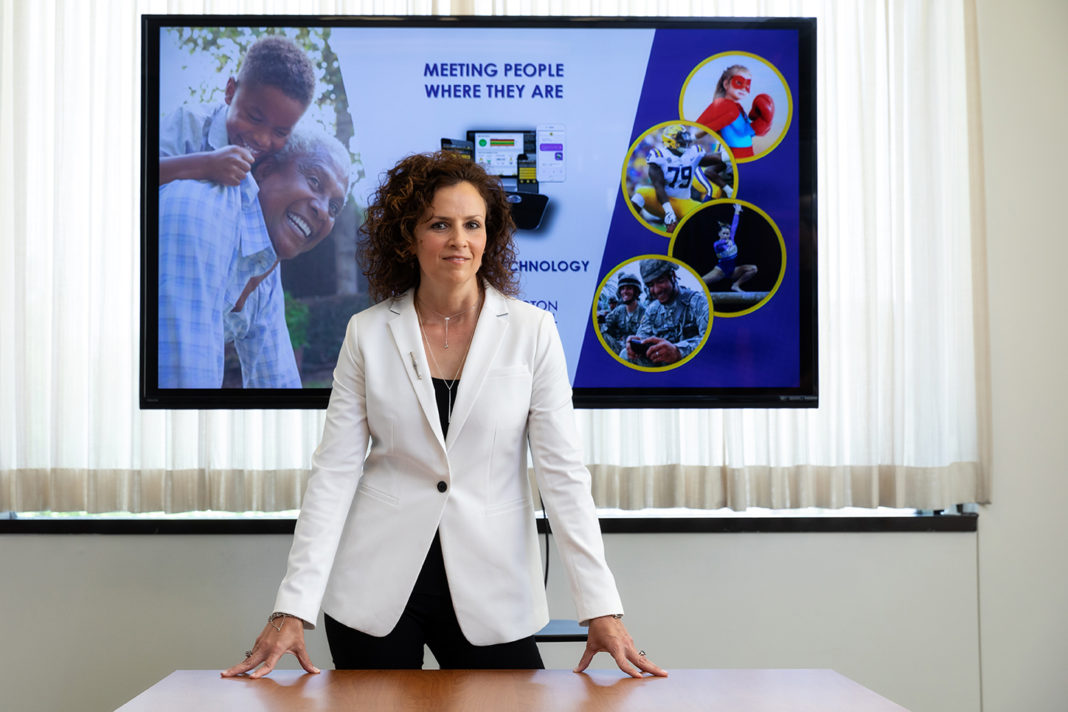
Fueled by those guiding principles, Stewart has spent her career pioneering translational research programs, or programs that push scientific research from labs and journals into the hands of everyday people who need it. As director of Pennington’s Behavior Technology Laboratory, Stewart finds ways of improving health through behavioral change strategies, notably technology. Stewart spent years developing and testing e-health technologies that were ahead of their time, including programs that help keep Army troops and NCAA athletes functioning at their optimum, both physically and mentally.
Earlier this year, Stewart led the launch of the Pennington Diabetes Clinic, the research center’s first treatment clinic for patients struggling with obesity and Type 2 diabetes in Louisiana. Using 30 years of research science conducted at Pennington, the clinic, which works with Medicaid patients, is a model for treatment of obesity and diabetes, costly conditions that affect communities across the globe. If successful, Stewart and her team aim to scale the clinic’s approach and expand its application beyond Louisiana.
Originally from Lake Charles, Stewart’s interest in science, psychology and understanding what drives human behavior was cultivated in her youth. She recalls winning top honors for a science project on Type 2 diabetes in sixth grade, an award she still keeps in her office. Later, as a competitive gymnast, Stewart also learned how demoralizing a career-ending injury could be when she suffered one herself—and what such an experience could teach serious athletes about bouncing back. Both experiences were bellwethers for her professional pursuits.
Read the full story about Stewart from the latest edition of Business Report.
