
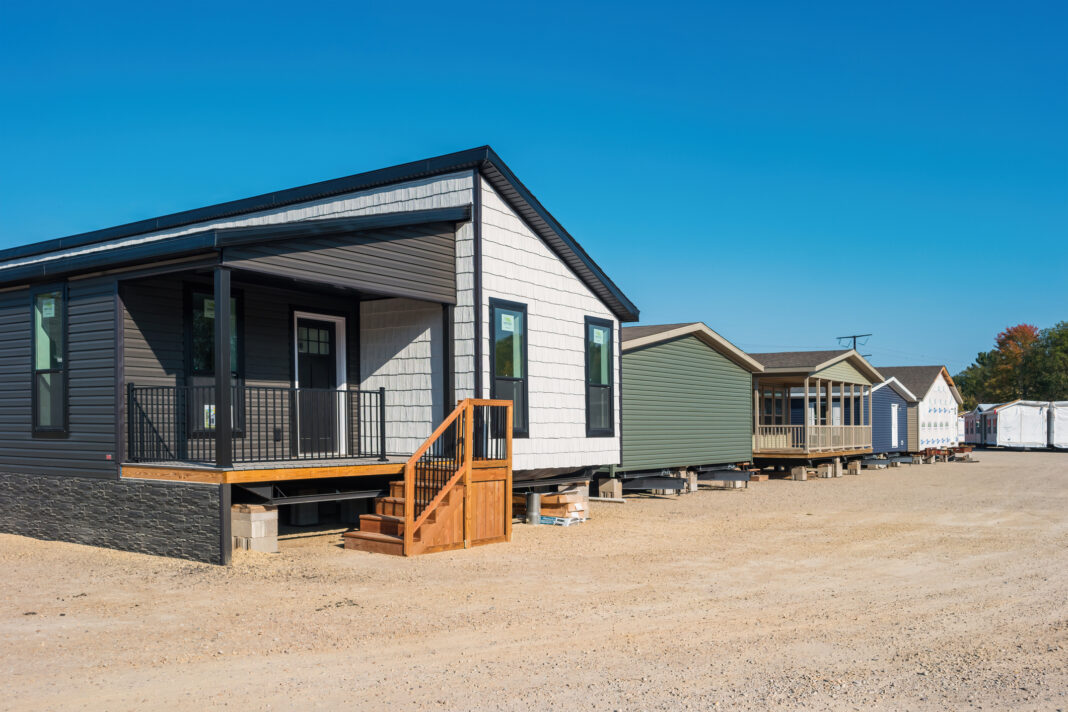
A change in federal housing regulations could expand the role of manufactured homes in addressing the nation’s affordable housing shortage, creating new opportunities for homebuilders, real estate developers and manufactured-housing operators, Stateline reports.
The 21st Century ROAD to Housing Act eliminated a 1974 requirement that manufactured homes be built on a permanent steel frame, or chassis. Removing the requirement could reduce construction costs by an estimated $5,000 to $10,000 per home and make it easier to stack units into two-story buildings, duplexes and multifamily developments.
Manufactured homes already cost about 50% less per square foot than traditional site-built homes, according to the Manufactured Housing Institute. UMH Properties, a publicly traded real estate company, says the change could allow it to build two-story homes and more affordable rental units on existing lots, increasing the amount of housing that can be developed on a given parcel.
Realizing the potential, however, will require states to update regulations that still define manufactured homes as requiring a permanent chassis. The Pew Charitable Trusts estimates that more than 30 states may need legislative or regulatory changes to comply with the new federal framework, with states generally required to certify compliance by July 2027 or 2028, depending on legislative schedules.
Outdated zoning restrictions, rising land costs and long-standing stigma surrounding manufactured housing have also limited development. States could use the regulatory changes to reconsider local zoning restrictions and make it easier for manufactured homes to qualify as real estate rather than personal property. That distinction matters because real estate classification can open access to traditional mortgages, which Pew estimates could save borrowers about $49,000 over the life of a typical $100,000 loan compared with higher-cost home-only financing.
