

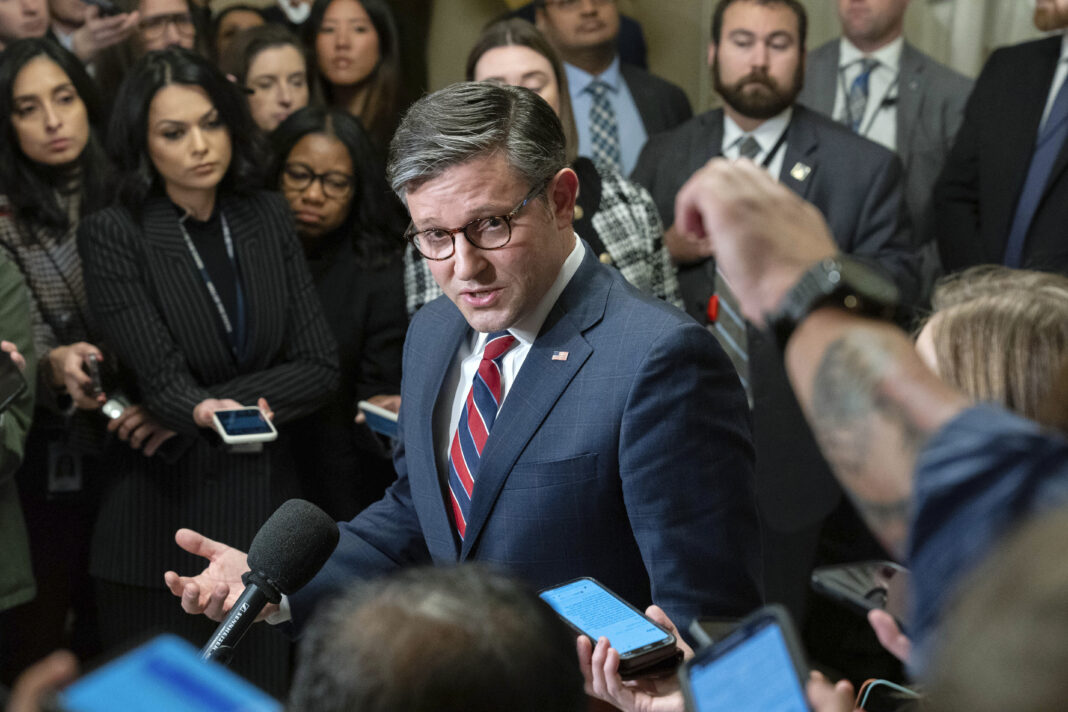
If you perused social media platforms back in October, focusing solely on personalities who make or spend money on Louisiana politics, you would have noticed an unmissable trend. That’s when photos went up on Instagram and Facebook and Twitter of politicos standing with either Jefferson Congressman Steve Scalise or Shreveport Congressman Mike Johnson.
Everyone with skin in the proverbial game—the game being federal politics in this case—wanted the world to know they were tight with Scalise, who at the time was angling to become speaker, but later settled for majority leader, the No. 2 position in the nation’s lower chamber.
Scalise’s failed bid, however, gave way to Johnson’s election as the new speaker. And in response, social media accounts were filled with his smiling pictures. In addition to holding what is arguably the most powerful gavel in the country, Johnson is now second in line to become U.S. president.
What an embarrassment of political riches for Louisiana, which has never had two politicians serving in these high-ranking positions at the same time.
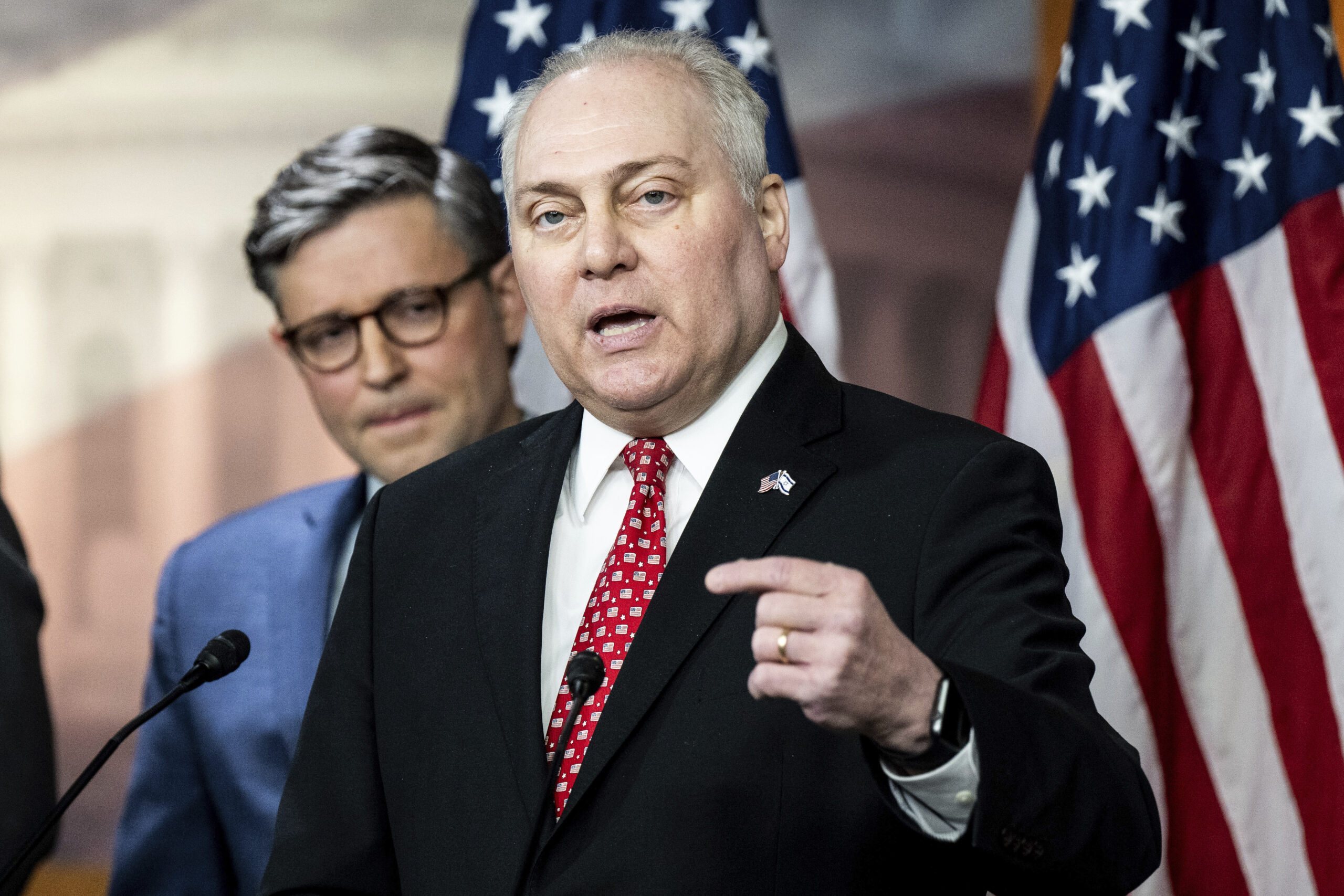
(Sipa via The Associated Press)
Adding prestige to power, the Bayou State also has two appropriators on the Hill in the form of Start Congresswoman Julia Letlow and U.S. Sen. John Kennedy. As members of the influential appropriations committees in both chambers, Letlow and Kennedy are certified budget drafters—and the budgets are where the money can be found.
That said, Louisiana’s business community, along with other special interests from the Bayou State, now have the opportunity to influence federal policies and regulations through a powerful and ever more senior congressional delegation. As a result, the priorities of the business community will, in so far as they influence our Louisiana legislators, become the nation’s.
No wonder there’s a mad dash from the Bayou to the Beltway to leverage these relationships. In the new year, this desire will be most on display at Washington Mardi Gras in late January. The multiday networking event of balls and parties remains the premier political event of the year.
Tyron Picard, a state and federal lobbyist from Lafayette who moonlights as a senior lieutenant for the Mystick Krewe of Louisianans, says krewe renewal rates for Washington Mardi Gras are at nearly 100%, thanks in no small part to the access the shindig will provide to actual, raw power. “My phone hasn’t stopped ringing,” Picard says.
As Louisiana politicos prepare to turn access into policymaking, there is one other unknown factor in how the state will take its place on the federal stage: Gov. Jeff Landry, who represented Acadiana’s old 3rd Congressional District in the House from 2011 to 2013.
“You have a really unique situation in Louisiana,” says Brent Littlefield, a Washington consultant with a long-standing relationship with Landry. “You have a new governor who has served on Capitol Hill and has maintained those relationship from outside the state. There are relationships not only with the delegation, but on the actual staff level. That will allow this governor to communicate with Washington in ways we haven’t seen before.”
Among Landry supporters, there’s already talk about moves to loosen up the federal management of oil and gas leases and potential lawsuits over everything from insurance regulations to the U.S. Army Corps of Engineers. While Landry has not yet publicly discussed his federal strategy, many of his top donors are expecting bold leadership.
Regional politics (regional to Louisiana) will certainly come into play in this federal storyline. If we see it anywhere, we’ll see it in the House budget process, with a speaker representing both rural and urban north Louisiana, and a majority leader representing the state’s centers of business and industry near the coast.
That also means Louisiana’s once and future industries will have a lot to say when it comes to spending priorities. The ports, our chemical companies, farmers, loggers and engineers will undoubtedly have the ears of the most powerful leaders in Washington, D.C.—in a new and important way.
“Having these relationships in place, it helps us in communicating our core needs, asks and wants,” says Jennifer L. Marusak, executive director of the Ports Association of Louisiana. “A year ago, if we got a meeting with leadership there would be all of this time spent on the education piece. Now the top two leaders in the House already know our needs. Relationships pay off tenfold, and not because of access or anything like that. There’s a shared work history.”
As such, expect to see familiar issues and themes in the big budget debates to come. From the River Parishes’ chemical industry monopoly to the new frontier of carbon capture and storage, from deep draft cargo focused ports to traditional oil and gas corporations, the issues facing these industries will get a new kind of attention.
Michael Olivier, the former secretary of Louisiana Economic Development, says there’s a pragmatic side to all of this proximity to power—and that pragmatism can be found in partnerships. For example, when Louisiana has to negotiate anything (like energy royalties) with neighboring Gulf of Mexico states, it will suddenly have more influence than ever before.
“You’re going to see some new things, like Louisiana and Texas having more of a symbiotic relationship,” Olivier says. “I’m not saying there were problems before, but there’s going to be more of an alignment now. This puts Louisiana in a position to begin trading favors and making new alliances.
Among those who like to think big, there are hopes that this new position of influence for Louisiana will mean the biggest barriers to expanding here at home for business and industry will get some attention, too. Perhaps some quality-of-life issues will take center stage, like with what’s happening in the Louisiana Legislature with its upcoming special session on crime.
Those interviewed for this story hope that concern, in concert with other barriers to training and retaining both blue collar skilled workers and white collar office executives, will find its way into the federal spotlight.
But most of all, Louisiana has a massive opportunity to improve its own public perception, from top to bottom. How that theme becomes an actual pet project of these influencers and our delegation is another issue. Maybe it manifests in the form of federal grants for infrastructure, tech and more.
“This is our opportunity,” Olivier says. “No one wants it to go to waste. But we should all remember that leadership shifts and changes and we don’t know yet what the next federal election cycle will look like, what the presidency will look like or even what the Senate will look like.”
