
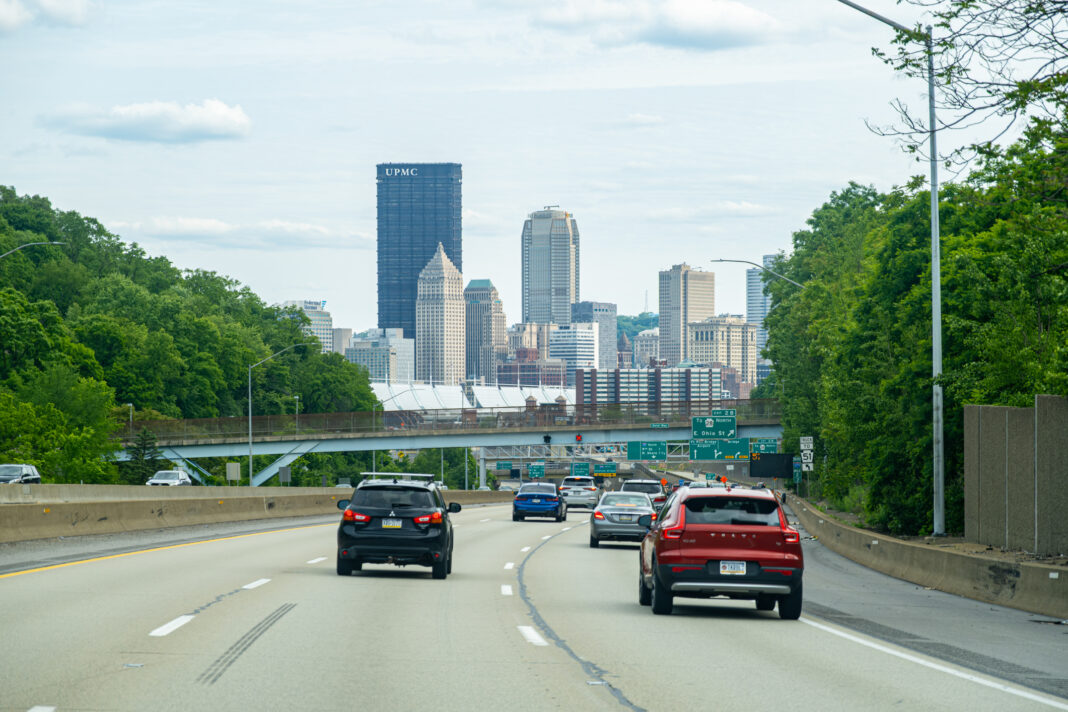
Transportation policy in the U.S. has become increasingly polarized along partisan and geographic lines, particularly over the role of automobiles, public transit and other modes of transportation, Bloomberg reports.
Republicans have increasingly emphasized highways, automobiles and individual choice, while Democrats in urban areas have more often backed public transit, pedestrian infrastructure, bike lanes and policies intended to limit the impacts of vehicles.
The divide is evident in debates over vehicle noise, electric vehicles, congestion pricing, fuel-economy standards and autonomous vehicles. The Trump administration has pursued policies favoring greater consumer choice and fewer federal restrictions on automobiles, while some Democratic-led cities have pursued measures such as vehicle-noise enforcement and congestion pricing.
Transportation was once an area of greater bipartisan cooperation. Research shows that Democrats and Republicans generally agreed on highway investment for much of the postwar era, while partisan differences over public transit became more pronounced beginning in the 1980s.
Geographic polarization has since reinforced the divide. Republicans are more concentrated in suburban and rural areas where automobiles are often essential, while Democrats are more concentrated in major cities where transit, walking and cycling are more common. Autonomous vehicles illustrate the tension, with the Trump administration promoting their development while some urban governments have raised concerns about how the technology could affect traffic, transit and street use.
