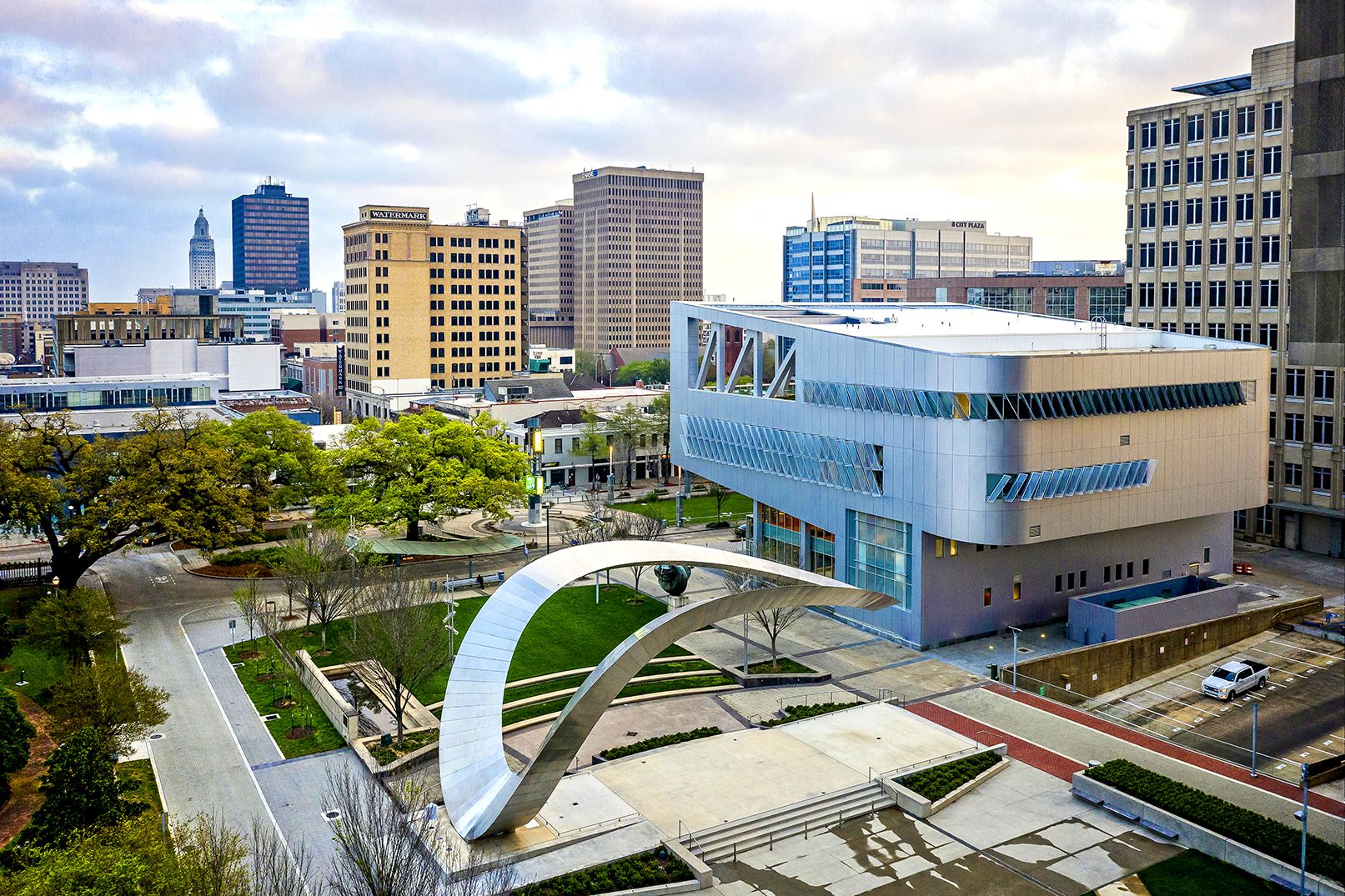
After months of research and stakeholder engagement, downtown Baton Rouge’s new master plan has arrived.
Plan Baton Rouge III lays out an ambitious road map for downtown’s next chapter. It includes more than 80 recommendations aimed at transforming the Capital City’s urban core into a more attractive place to live, work and play.
Commissioned by the Baton Rouge Area Foundation and developed by the international planning and design firm Sasaki, the plan has five core objectives:
- Activate the riverfront as a “front porch” for the city
- Diversify the downtown economy
- Create walkable neighborhood centers
- Connect cultural and civic assets
- Improve transportation and accessibility
Among the plan’s most notable recommendations are the development of a riverfront park and entertainment district, the expansion of housing options across income levels, the creation of a downtown transit network and investment in greenways, pedestrian corridors and cultural destinations. Also emphasized are the adaptive reuse of historic buildings, support for small businesses and year-round programming to activate public spaces.
In a statement, BRAF President and CEO Chris Meyer describes Plan Baton Rouge III as having been shaped by a “clear understanding of today’s opportunities and challenges.”
“It gives us a realistic, actionable road map to grow our economy, celebrate our culture and create a downtown that works for everyone,” Meyer says.
The plan aims to triple downtown’s residential population, create 10,000 jobs and “position downtown as the region’s premier destination for residents and visitors alike,” according to BRAF. More than $1.5 billion in early investments are envisioned.
Some of the recommended projects could move forward in the short term, while others may take years or decades to materialize. Successful implementation will require citywide collaboration.
“With a vision as far-reaching, long-term and multifaceted as Plan Baton Rouge III, implementation will require coordinated stewardship with many individuals and entities advancing different components simultaneously,” the report reads. “Success will depend on the ability of local leaders to maintain momentum and public enthusiasm for the vision.”
Plan Baton Rouge III seeks to build on the foundations laid by Plan Baton Rouge I in 1998 and Plan Baton Rouge II in 2009, which together led to roughly $3 billion in public and private investment. Some of the most transformative developments to come out of those earlier plans are the Shaw Center for the Arts, the Hilton Baton Rouge Capitol Center, Rhorer Plaza, Main Street Market and the Downtown Greenway.
Explore Plan Baton Rouge III here, and read a recent Business Report feature on downtown’s evolution over the years here.
GET DAILY REPORT FREE