

Baton Rouge is emerging as a strong example of how smaller, college-driven markets are outperforming traditional retail expectations, according to Blay Bradley, senior vice president of construction and property management at New York-based DLC Management.
Bradley says the firm views college towns like Baton Rouge as a key investment theme, driven largely by LSU’s economic impact. While the metro may not rank among the nation’s largest, its underlying demand drivers, ranging from higher education to state government, health care and industrial activity, make it a compelling retail market.
“College towns with flagship universities create demand that isn’t always captured by traditional retail metrics,” Bradley says, noting that enrollment growth and campus expansion generate ripple effects across housing, retail and services.
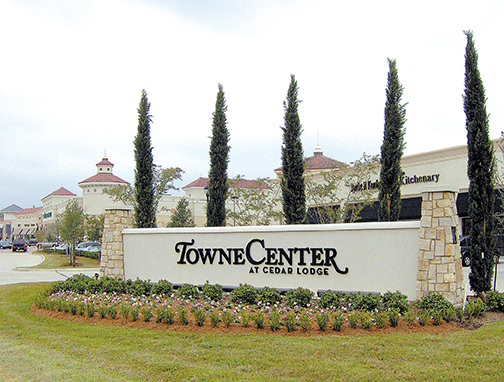
That dynamic is particularly evident at Towne Center at Cedar Lodge, which DLC began managing last year after purchasing the development for $81 million. Rather than serving solely as a student-oriented retail hub, the center caters to a broad demographic that includes students, young professionals and higher-income households.
Towne Center is at the intersection of both convenience-based and day-to-day retail that very much supports the college-age population as well as bridging the older homeowner professional crowd that lives in some of the neighborhoods directly surrounding the center on the east side of town, he says.
Bradley adds that Baton Rouge’s relatively young population—millennials and Gen Z—has shaped tenant demand, emphasizing convenience, experiential retail and food-and-beverage offerings.
“Having a strong food and beverage presence alongside traditional retail is critical,” he says. “It keeps people on-site throughout the day, whether it’s lunch, errands or a night out.”
Despite its smaller size, Baton Rouge is attracting national retailers typically selective about market entry. Bradley notes that many view the city as a “one-store market,” making high-quality centers especially competitive for new tenants.
He referenced the opening of Dick’s House of Sport last summer, one of only 26 locations nationwide.
That demand is being amplified by a broader national trend: limited new retail construction paired with a rebound in retailer expansion. Bradley says the imbalance is creating favorable conditions for established centers in markets like Baton Rouge.
“There’s been very little new supply, but demand from retailers is strong,” he says. “That’s creating opportunities for well-located, well-managed centers to continue improving their tenant mix.”
For DLC, the strategy at Towne Center is not a major redevelopment, but incremental improvement—leveraging national tenant relationships to bring new concepts to the property while maintaining its role as a community staple.
Bradley adds that Baton Rouge mirrors many national retail trends—from experiential concepts to aspirational brands—despite its size, reinforcing its appeal as a long-term investment market.
