This story is part of Business Report’s Capital Assets edition. Get the entire 2026 Capital Assets edition.
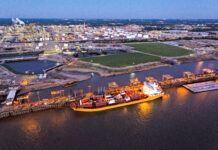
Greater Baton Rouge is easy to underestimate. Drive through, and you might see a midsized Southern capital—government buildings, a big state university, refineries along the river. What you won’t immediately see is that this region sits at the center of one of the most important industrial corridors in the U.S., producing materials that show up in supply chains nationwide.
One parish, many pathways

The Capital Region of Louisiana—nine parishes, more than 880,000 residents, anchored by Baton Rouge and the Mississippi River—has an image problem. Not because it lacks assets, but because those assets don’t fit a simple narrative. This is where petrochemical plants and political power meet Michelin-recommended restaurants and SEC football. Where suburban parishes are booming while downtown reconnects with a riverfront it turned its back on decades ago. It’s a region connected by the river, interstate corridors and an economy built on government, industry, education and health care working in tandem.

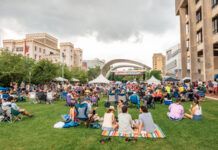
Baton Rouge offers more than 20 museums, active arts programming, a diverse culinary scene and charming neighborhoods. It’s centrally located for day trips to Lafayette, St. Francisville and New Orleans. Nine million visitors spent $1.7 billion here in 2024. They come for the Southern hospitality, the food, conventions and sporting events, as well as the unique culture and heritage of south Louisiana, says Jill Kidder, president and CEO of Visit Baton Rouge. “We see ourselves as the melting pot of all that, of the best of Louisiana.”

East Baton Rouge Parish anchors employment, while the story of growth is increasingly suburban and distributed. Ascension Parish has expanded about 26% since 2010 to reach approximately 135,000 residents, driven by industry investment and proximity to the city. Livingston Parish added over 2,300 residents in 2024 alone and is experiencing a 7% increase since. With approximately 155,000 residents and a median household income of $78,617, Livingston represents the kind of affordable suburban expansion attracting young families and skilled workers. West Baton Rouge Parish is home to the Port of Greater Baton Rouge.
While refineries and government offices concentrate along the river corridor, residential development pushes outward into these growing parishes and East and West Feliciana parishes, where rural character meets commuter convenience. Iberville, Pointe Coupee and St. Helena parishes round out the lineup.
Four pillars, one economy
Lori Melancon, president and CEO of the Greater Baton Rouge Economic Partnership, says one common misconception about the region is that Greater Baton Rouge is a midsized metro with limited reach. The reality, she says, is the opposite.
“The Capital Region sits at the center of one of the most important industrial corridors in the United States,” she says. “The materials produced here show up everywhere: in medical equipment, protective gear, packaging, electronics, vehicles, sporting goods and the everyday consumer goods people use without thinking twice.
“If you walk through a grocery store or a hospital anywhere in the country, you’ll see products that exist because of the people and facilities in this region. Our industrial base isn’t just supporting the region’s economy; it’s part of the supply chain that keeps the national economy running.”
Industry built the modern city. Refineries, petrochemicals and heavy manufacturing line the river corridor, supported by rail, barge access and interstate connections. Now the base is evolving. “Many of our recent projects connect traditional industrial assets with emerging technologies such as clean fuels, carbon reduction, and complex systems support,” Melancon says. “This shows that the region is diversifying in a way that strengthens our core industries while positioning us for long-term global competitiveness.”
Government provides the foundation. As Louisiana’s political nerve center, Baton Rouge houses the state Capitol and the machinery of public administration. That means stability, policy access and a cluster of professional services that follows power.
Education centers on LSU, which functions as a talent pipeline and research engine. Southern University, a historically Black university with deep roots in the region, adds educational breadth and cultural significance. Regional colleges and workforce training programs round out a system trying to keep young professionals from leaving.

Health care continues expanding its footprint. Our Lady of the Lake Regional Medical Center, Baton Rouge General Medical Center, and the Pennington Biomedical Research Center anchor a sector that offers employment stability and increasingly sophisticated services across parishes. Together with education, it creates a knowledge sector that complements the region’s blue-collar roots.
A River City reconnecting
Community leaders are working to make downtown Baton Rouge the region’s thriving core.
Whitney Hoffman Sayal, executive director of the Downtown Development District, notes that the International Downtown Association classifies the city’s downtown as emerging, one that is experiencing renewed growth and development, but hasn’t reached the full potential or density of an established downtown. Between 2012 and 2022 the downtown residential population grew 16.4%, a notable surge, considering the parish and state population declined. Downtown apartment occupancy rates are at 95%.
Diversification of the downtown economy is one of the drivers of growth, Hoffman Sayal says. “We’ve seen growth in construction, engineering and architecture. We need that diversity in our market downtown in addition to always being catered toward our government institutions. But what we’re really lacking is retail. That offers a huge opportunity. The more residents we’re able to attract downtown, the more retailers will realize the viability of the market.”
That transition from emerging to established is increasingly focused on the Mississippi River. Although it should be downtown’s major asset, the community consensus is that the city is not connected to the riverfront in the way that it could be, observes Hoffman Sayal. For decades, interstate infrastructure and industrial development created barriers between downtown and the waterfront.
Local developer and real estate attorney Charles Landry is negotiating for the development of what early on was referred to as “a string of pearls,”: a convention center expansion with a headquarters hotel, a Memorial Park project linking downtown to Southern University, and a new LSU arena, designed to draw the level of big-name entertainers who’ve bypassed Baton Rouge in the past.
As part of that plan and the broader Plan Baton Rouge III, led by community groups, the Raising Cane’s River Center would be not only expanded as a larger convention center, but repositioned to engage with the riverfront. The proposed headquarters hotel is vital to downtown economic growth. Kidder says. “We’re not even on the radar of some of the meetings and conventions that are of regional and national scope because we don’t have a headquarters hotel attached to our River Center.”

Joshua Brooks is principal lead for planning and design firm Sasaki, which is drawing on community input to set priorities for Plan Baton Rouge III. He said during a community meeting in November that the goal is to turn downtown and the riverfront into the kind of authentic, pedestrian-friendly hub that is enough of a draw for residents to come downtown almost daily, rather than once every month or two.
And at the heart of it is the river
“Nothing is more beautiful,” says Kidder, “than the view from Southern’s campus, on the bluff up there, watching the sun go down over that river. It’s spectacular. How many people are walking and jogging and biking and rolling strollers and walking dogs on our riverfront?
“But I think we’ve got a ways to go. Planners know people want to get back to the water, to see it, to experience it. Even watching the big tankers or barges, it’s theater. We’ve seen people getting engaged on the levee and certainly we want our businesses to turn their face back to the river. These next few years will be generational in change, if everything comes to fruition,” Kidder says.
If the Mississippi is destined to be the front porch of Baton Rouge, Kidder sees tourism as the front door to economic development in the Capital Region. If a visitor to an LSU game, a bowling tournament or a business convention experiences the region’s hospitality and culture, they may well return. Eventually, they may move to the region. More residents mean more business growth.
“It used to be that a business could locate in a place and attract employees to follow them,” Kidder notes. “But now businesses are following the people, following the talent. We understand that we are that first date in the economic development cycle.”
Ileana Ledet, chief economic competitiveness officer for Louisiana Economic Development, says the region’s primary challenge is simply that not enough people know the true story. “Having people tell the positive things that are happening in Louisiana as a whole—that’s been our key challenge,” Ledet says. “Telling it and believing it. Everyone here should help tell the story of the great things, the tremendous things that are happening.”
GET DAILY REPORT FREE