Changing the game: Return-to-office orders spark redesigns focused on giving employees freedom, comfort and well-being

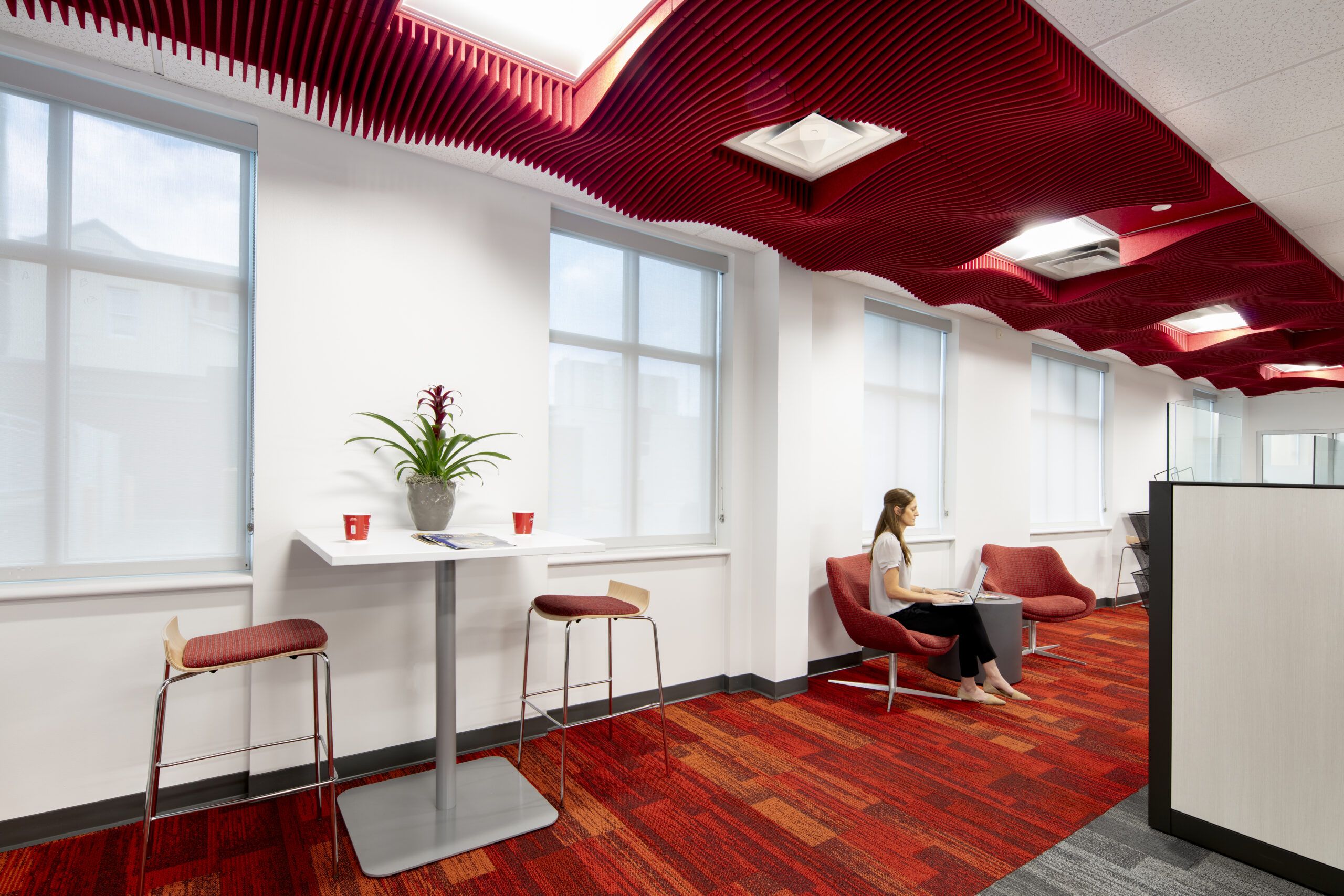
NEW WORK STYLES: The interior renovation of the Louisiana Lottery headquarters in March 2024 transformed a dated office building into a vibrant, modern workspace. (Photo by Chad Chenier via Holly & Smith Architects)

Back in April, Gov. Jeff Landry issued an executive order mandating state workers return to the office effective July. Enough of this remote work nonsense, Landry’s order suggested, declaring, “research continues to affirm that in-person work promotes collaboration, cohesion, efficiency and accountability for employees and supervisors.”

The command mirrored a mood shift across the country this year in both the public and private sectors.

President Donald Trump issued an executive order in January that sent federal workers back to the workplace, and numerous large corporations, including Amazon, Dell and AT&T, also eliminated remote work, a preference famously underscored by JPMorgan Chase CEO Jamie Dimon in a leaked rant about the damage telework has done to relationships and productivity. Other companies that haven’t brought back employees have fully solidified hybrid models that mandate face-to-face work on specific days.

The ongoing debate about remote versus in-person work has triggered an existential crisis about office space, including exactly how much companies need these days and what those spaces should feature. The reckoning has many employers rightsizing footprints to accommodate post-pandemic work patterns, experts say.


READ MORE

The new office design playbook

“What many companies have realized is that they don’t necessarily need to have the same amount of real estate for every person,” says Holly & Smith Architects associate principal and director of interior design Mary Mowad Guiteau, who is working with the state of Louisiana, Entergy, Ochsner Health, the Louisiana Lottery and others to rethink design in the post-pandemic era. “There’s a lot more shared space.”

In 2019, just 6.5% of the workforce worked from home, according to the Bureau of Labor Statistics. The pandemic exploded that figure, forcing workers across industries into home offices, many of them makeshift, during the height of social distancing. The urgency to work from home subsided by 2022, but by then telework was normalized.

“A lot of companies that had lease renewals in 2022 took a little bit of a gamble,” recalls Elifin Vice President of Office Sales and Leasing Fabian Edwards. “If they made the call that the remote model was going to stick around, they took that as an opportunity to downsize their footprint.”

But at the same time, they moved into nicer spaces. The trend earned the nickname, “flight to quality,” Edwards says.

Now, more than five years out from the pandemic, telework still varies widely, creating a patchwork of expectations that have made it challenging for employers to future proof office space needs. The safest play seems to be agility.

“The key tenets are really all about flexibility and mobility,” Guiteau says.

And for good reason. It’s hard to make everyone happy. Workers tend to feel one way or the other about the RTO trend.

According to a 2024 report on remote work by McKinsey & Company, 54% of workers indicated a preference for remote work options. Moreover, flexible-work models were one of the top three motivations for seeking a new job.

A MODERN MERGER: When it moved into City Farm in 2021, Envoc chose an aesthetic that integrated its high-tech mission with the modern farmhouse theme of the development. (Courtesy Holly & Smith Architects)

THE OFFICE UPDATE

Indeed, the fear of losing talent over the telework issue has motivated some employers to update their offices, she adds.

“What companies are finding is that they need to provide a space that people will want to come back to, so that means updates, like new finishes, lighting and amenities. Things like break rooms and mothers’ rooms are standard these days.”

Office space occupancy rates are up across metro Baton Rouge, Edwards notes. Class A has increased 10% in the last year and the total occupancy number, which Edwards believes is a better metric for overall office market health, is up 7%.

“That is indicative of businesses as a whole moving away from remote work and returning to the office,” he says.

But post-pandemic offices may see less square footage dedicated to individuals and more to collaborative areas.

“People are looking for spaces that may be smaller because you may have lots of people coming in some days and other people coming in other days,” says Downtown Development District Executive Director Whitney Hoffman Sayal. “They’re looking for more collaborative spaces and meeting rooms. The market is adjusting to what COVID created.”

Guiteau is analyzing 1.5 million square feet of state office space within the Capital Complex, a project that began before the governor’s executive order. It reduces individual square footage requirements between 10% and 20%, she says, calling for flexible work areas, more natural light and other amenities aimed at increasing productivity.

PLACE AND POSTURE: The Claiborne Building on North Third Street features design elements that allow users to work or meet sitting down, standing up or lounging. (Photo by Chad Chenier via Holly & Smith Architects)

The state is currently engaged in a multiyear plan to renovate Capital Complex offices using the new standards, beginning with the first floor of the Claiborne Building, Guiteau says.

The decrease in individual space requirements is fueled in part by efficiencies in furniture and technology. Desktops have largely been replaced by laptops and docking stations. Furniture has gotten leaner and more agile. And workers think little of moving around and plugging into different areas of the office, Guiteau says.

In fact, the designer notes that many like the option of working in different areas, so more employers are buying into creating a “palette of place.”

“It’s a good idea to provide different places for people to get the job done, so that you’re not confining anyone,” she says. “In the post-pandemic world, choice and control for employees are huge.”

ROOM WITH A VIEW: Workspaces at Reily Foods Company in New Orleans feature a line of sight to windows, allowing natural light to pour in. (Photo by Jeff Johnston via Holly & Smith Architects)

Natural light has also become an important part of post-pandemic design, Guiteau says.

Window suites that normally would have monopolized natural light are now being outfitted with glass openings that help distribute sunlight across interior spaces. Such changes were incorporated into the Louisiana Lottery’s post-pandemic redesign.

“We probably haven’t seen all of the effects of the return-to-work orders.” – FABIAN EDWARDS, vice president of office sales and leasing, Elifin

“The filtration of light into the space does a lot for people’s wellness and productivity,” Guiteau says. “People have been very comfortable at home sitting on their sofa or porch with lots of natural light.”

Baton Rouge hasn’t yet seen the full impact of the RTO trend, Edwards surmises.

“It can be a multimonth process, if not longer, especially for larger companies,” he says. “So we probably haven’t seen all of the effects of the return-to-work orders.”