Why global manufacturers are betting billions on this region

iStock.com/Paola Giannoni

A $5.8 billion steel mill. A $4 billion ammonia facility. Over $10.6 billion in capital investment in 2025 alone. Something is happening in Louisiana’s Capital Region—and site selectors are paying attention.

This story is part of Business Report’s Capital Assets edition. Get the entire 2026 Capital Assets edition.

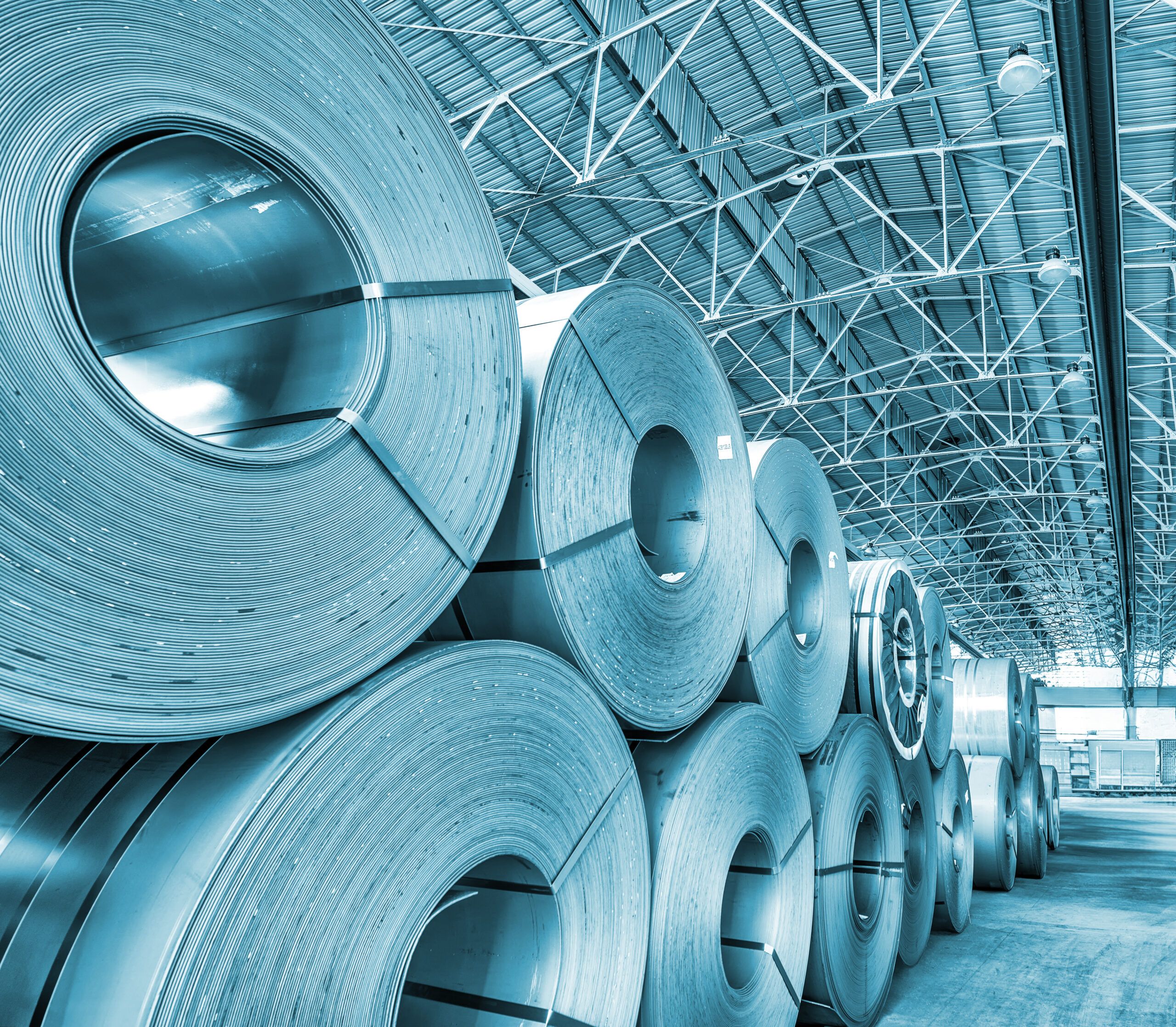
In March 2025, Hyundai Steel chose Ascension Parish over competing Gulf Coast locations for the largest single economic development project in the region’s history.

The ultra-low-carbon steel mill will create 1,300 jobs.

One month later, CF Industries, Jera, and Mitsui committed $4 billion for the world’s largest ammonia facility at the same industrial park, adding 103 jobs. ExxonMobil announced $100 million in upgrades at its Baton Rouge Complex, and Pipe and Steel Industrial Fabricators announced its second Livingston Parish expansion in two years, which will mean a $5.1 million investment.

Average salaries associated with these new direct jobs range from $62,400 to $110,000.

“Together, these projects show a region that is growing, competitive and positioned for long-term success,” says Lori Melancon, president and CEO of the Greater Baton Rouge Economic Partnership.

Loren Scott, professor emeritus of economics at LSU and president of consulting firm Loren C. Scott & Associates, foresees the region adding 10,500 jobs in 2026 and another 11,100 in 2027, in his Louisiana Economic Forecast.

Site Selection magazine recently named Greater Baton Rouge a Top 10 U.S. Metro for economic development.

“If I had 30 seconds to persuade a CEO to pick the Capital Region, I would say, ‘Take a look at the recent expansions,’” says Ileana Ledet, chief economic competitiveness officer for Louisiana Economic Development. “When you see companies expanding, that’s based on experience. That is proof that this is the No. 1 place to do business.”

For executives evaluating where to locate or expand, here’s what’s driving those decisions.


“Together, these projects show a region that is growing, competitive and positioned for long-term success.” Lori Melancon, president and CEO,
Greater Baton Rouge Economic Partnership.


Lower costs than competing markets

Louisiana’s property tax rate is 0.55%—nearly three times lower than Texas at 1.58%. For a $100 million industrial facility, that translates into more than $1 million in annual savings.

Electricity costs are lower, too: Industrial rates average 6.8 cents per kilowatt-hour in the Capital Region versus 7.2 cents in Houston and 8.1 cents in Mobile, Alabama. For large manufacturers, that can mean $200,000 to $650,000 in yearly savings.

Louisiana’s personal income tax is now a flat 3%, the second lowest among states that levy one. Corporate tax rates rank among the 10 lowest nationally.

Louisiana also layers incentives on top of low base costs. The Industrial Tax Exemption Program provides up to 10 years of property tax abatement for new manufacturing projects.

The High Impact Jobs Program offers cash grants of up to 22% of wages for jobs paying above the parish average.

“This program is creating job opportunities for folks to stay here and live here and work here and make a very good living,” Ledet says. “That’s at the very top of our minds. Are those jobs paying higher wages and giving people a path toward a better livelihood here in Louisiana as opposed to somewhere else?”

The state is expanding its approach beyond traditional tax credits in other ways as well. For Hyundai Steel, Louisiana offered a $100 million infrastructure grant covering roads, rail, electric connections and pipeline upgrades—improvements that position the entire RiverPlex MegaPark for future investment. The 17,000-acre site is the largest undeveloped tract with deep-water Mississippi River access.

The state also offers incentives returning 25% of Louisiana workers’ salaries and 18% of production costs for digital media and software companies, part of a broader push toward economic diversification.

Trained workers ready to go

Melancon says the number of residents in the region with a bachelor’s degree grew 8% in 2024, driven primarily by in-migration of college-educated residents.

“These are early promising returns on talent retention and quality-of-life efforts the Partnership and other local organizations have undertaken,” she says. “While our geographic location certainly gives us a natural advantage in recruiting some industries, the demand for talent, particularly in high-wage positions, is strong across the country right now. Our ability to train, retain and attract this talent puts us in a competitive position going into 2026.”

In Louisiana, more than 9,000 college students graduated with a STEM degree in 2024, up 98% since 2010, according to LED. LSU’s College of Engineering alone graduates more than 800 engineers each year.

A major differentiator is LED FastStart, ranked No. 2 nationally for workforce training by Business Facilities. FastStart recruits, screens and trains workers at no cost to employers. “Companies will not choose Louisiana if they think they won’t find the workers they need,” Ledet says.

For Hyundai Steel, FastStart is building a dedicated training center. When BBP Sales expanded its Baton Rouge headquarters with 75 new jobs in 2024, FastStart delivered job-ready employees within months, eliminating the usual six-month hiring delay.

The Capital Region’s nine parishes—Ascension, East Baton Rouge, East Feliciana, Iberville, Livingston, Pointe Coupee, St. Helena, West Baton Rouge and West Feliciana—function as one integrated labor market. Some 38% of Livingston Parish workers commute to East Baton Rouge, and 22% of Ascension’s industrial workforce commutes in from nearby parishes. Any facility can draw from more than 850,000 residents.

“Pipe and Steel sits in the epicenter of the best industrial labor pool in the state: Livingston Parish,” says Kylie Sparks, president and CEO of Pipe and Steel Industrial Fabricators. “The people of our parish are key in building the industrial sector in the Gulf Coast region and the state of Louisiana.”

(Photo by iStock.com/Jacob Boomsman)

World-class transportation infrastructure

Louisiana handles 20% of all U.S. cargo tonnage through five of the nation’s top 15 ports. The Port of Greater Baton Rouge ranks in North America’s top 10 and spans 85 miles along the Mississippi River with a 45-foot navigation channel.

Barge transport is substantially less expensive than rail transport, and both are significantly cheaper than over-the-road trucking. For manufacturers moving millions of tons, river access is transformative.

The region sits 230 miles upriver from the Gulf of Mexico—close enough for deep-water shipping, far enough inland to avoid coastal constraints, such as storm surge.

Louisiana also maintains 50,000 miles of pipeline, the densest network outside Houston, which gives chemical manufacturers near-immediate access to raw materials. That proximity typically reduces transportation costs by 15% to 20%.

The state’s FastSites program has invested $150 million to prepare key industrial sites with rail, port and utility connections. When Hyundai evaluated RiverPlex MegaPark, the deep-water dock infrastructure was already permitted and engineered. In other Gulf Coast markets, that process can take 18 to 36 months.

“It’s a whole of government approach,” Ledet says. “Businesses want to know that we’re talking to our sister agencies about permitting and regulations. Traditionally, when people talked about incentives and economic development, often they were talking about tax credits, sometimes tax rebates or grants. But I think it’s not a stretch to call Louisiana an innovator in how we are incentivizing businesses by enhancing the ease of doing business.”