Sectors: The Capital Region is becoming a critical node in the national supply chain network

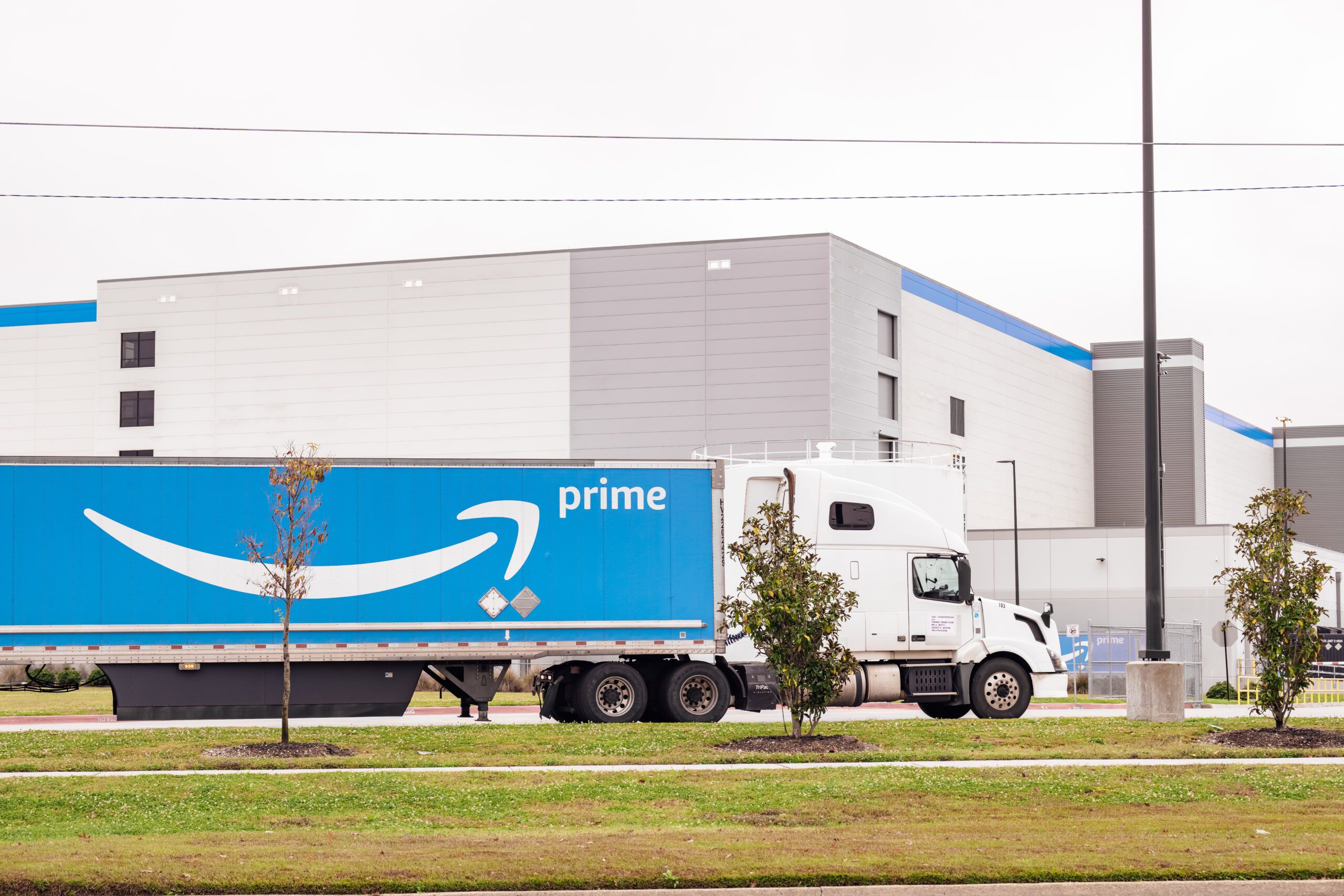
Amazon’s fulfillment center opened at the former site of the Cortana Mall in June 2024. (Photo by Jordan Hefler)

The Capital Region is rapidly becoming one of the South’s most strategic logistics and distribution centers, leveraging its geographic position, transportation infrastructure and deep-water port access to attract major national players.

“The Capital Region offers something rare: interstate highway access, rail connectivity and a deep-water port all within a compact geographic area,” explains Ileana Ledet, chief economic competitiveness officer for Louisiana Economic Development. “For logistics operators, that combination dramatically reduces transportation costs and delivery times.”

Louisiana’s logistics industry supports more than 110,000 jobs, playing a key role in the state’s economy. From ports and maritime freight to warehousing and transportation equipment, this sector helps keep goods moving across the country and around the world.

More than 14,400 people are employed across the Capital Region’s logistics, distribution, and transportation sectors, according to the Greater Baton Rouge Economic Partnership. Over the past five years, logistics and transportation employment in the region has grown faster than overall employment.

LSU prepares talent for the sector through its bachelor’s degree in industrial engineering, which emphasizes systems optimization, supply chain management and project efficiency. Advanced training is also available through graduate programs in transportation engineering, supported by the Louisiana Transportation Research Center.

Between 2022 and 2025, jobs for captains and sailors in the water subsector experienced the largest growth of any logistics jobs in the region, says Lori Melancon, president and CEO of the Greater Baton Rouge Economic Partnership. 

“This is a testament to our strength not only as a multimodal transportation hub, but the geographic advantage we have as a metro with a major port, an airport, significant rail capacity and two interstates,” she says. 

Also on the rise since 2022 are more traditional logistics jobs for mobile heavy equipment mechanics and their supervisors, with 100 new jobs in each category.

A rare geographic advantage

Positioned at the intersection of Interstates 10 and 12, the area serves as a crossroads for east-west and north-south freight movement. I-10 connects the region directly to Houston, New Orleans and Florida markets, while I-12 provides efficient access to Mississippi and points north. Within a day’s drive, logistics operations can reach approximately 45% of the U.S. population, making it an ideal location for regional distribution centers serving the Southeast and beyond.

Evan Scroggs, president and managing principal for Lee & Associates in Baton Rouge, describes the regional advantage as “sitting at Main and Main—the intersection of the Mississippi River with Interstate 10.”

This advantage is amplified by the Port of Greater Baton Rouge at the convergence of the Mississippi River and the Gulf Intracoastal Waterway. It’s the farthest inland deep-water port on the Mississippi River, processing over 70 million tons of cargo annually and consistently ranked in the nation’s top 10 ports by tonnage. 

“Having deep-water access up to Baton Rouge and deep-water sites along the river that allow for petrochemical development manufacturing; you can’t discount that,” Scroggs says. “Our pipeline network is another thing that is unique for us as more product moves underground, particularly natural gas. And there’s the ability to move carbon as well. That’s a big advantage we have in our market.”

Louisiana has one of the most advanced pipeline networks in the world, Ledet says. The fully integrated network carries some of the state’s most lucrative natural resources from the ground to refineries and process industry plants. The state’s nearly 50,000 miles of pipelines crisscross every major highway, railroad and navigable waterway in the state.

(File photo)

Strategic Infrastructure Investment

The Port of Greater Baton Rouge continues investing heavily, adding a new barge-mounted crane, expanding rail connectivity, deepening the river channel, and moving forward with a fifth berth.

One major advance is the development of the RiverPlex MegaPark and the surrounding area on the west bank of the Mississippi River in Ascension and Iberville parishes, Melancon says.

(File photo)

“The area is some of the last undeveloped land in the region that the Army Corps of Engineers has approved for deep-water port access, which is important for domestic and international distribution,” she says.

“As part of the announced Hyundai Steel project, the area will see significant rail development, as well as general infrastructure improvements to accommodate expected future economic development wins. Having more than 15,000 acres of greenfield to develop is good, but adding in significant public and private infrastructure investment makes it incredibly competitive for projects.”

As international demand continues to grow for fuel, steel and other products either made in or distributed by way of the Capital Region, Melancon notes, “we anticipate the Port of Greater Baton Rouge to see further growth to meet maritime demand.”

This story is part of Business Report‘s Capital Assets edition. Get the entire 2026 Capital Assets edition.