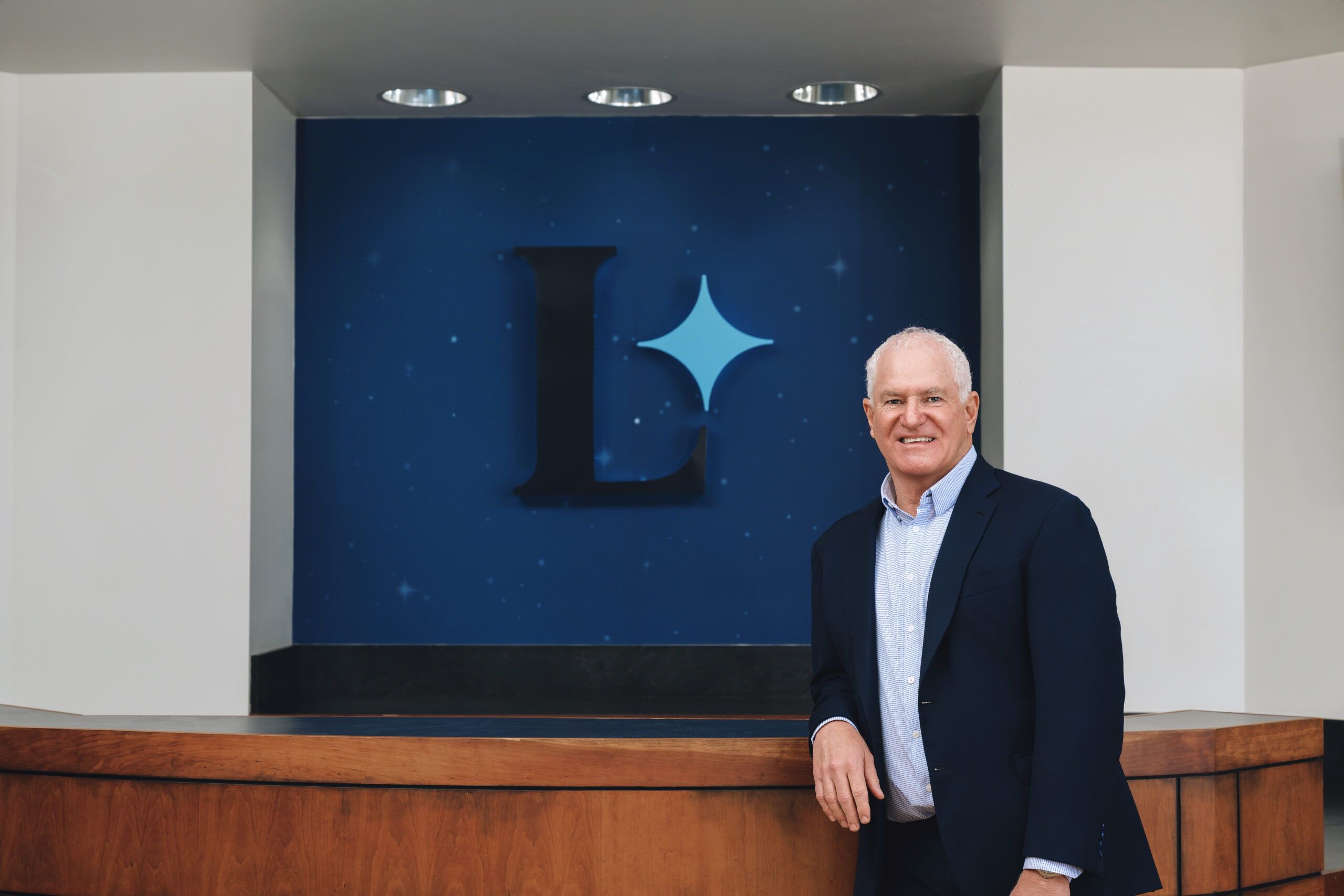
Why Brian Haymon chose the riskier path

When Brian Haymon created his own grassroots, from-the-ground-up company at the age of 57, he didn’t want it to be just another 2.0 version of the business he’d just left. He wanted to tap into one of the main advantages afforded to a new entrepreneur: a chance to create a resilient, malleable business model not constrained by corporate bureaucracy.

Haymon certainly had experience on his side, as he’d literally grown up in the business. In 1952, his father started the country’s first barge tankerman service—where certified maritime professionals transfer, handle and store oil and chemicals on barges, tankers and ships—as a side gig while working on the docks of Standard Oil Co. in Baton Rouge.

Then called Petroleum Service Corp., the business steadily grew over the years, along with its reputation for dependability in the industrial space. The young Haymon worked summers there while in college, then later while he attended LSU Law School.

Following a several-yearslong stint as an attorney in San Diego, he came back to Louisiana in 1990 to work alongside his father and older brothers. When the family business was acquired in 2004, he then worked for the parent company, SGS Petroleum Service Co. another 13 years—11 of them as CEO—catering to the likes of ExxonMobil, Dow and Shell.

Over time, however, Haymon found himself dissatisfied with the job. He also began noticing a very real local need for another competitor in the market. Ultimately, he set out to create something new: a company focused solely on loading and unloading services, but with a youthful mindset not afraid of trying new things.

Malleable foundation

Haymon founded Loadstar Product Handling Services LLC—now branded simply as Loadstar—in 2017, but didn’t hire his first employee until August 2019 due to a noncompete agreement with his old employer. And while he’d hoped to begin operations in March 2020, the COVID pandemic precluded that from happening, and the date was pushed back to February 2021.

In the interim, he prepared training and safety manuals, along with other procedural documents, and qualified for a Louisiana contractor’s license. He also formulated a well-defined business plan with an intentional focus on innovation.

“I felt very strongly that this journey would be one of discovery,” Haymon says. “I recognized that technology and innovation were needed for our line of work, and I wanted Loadstar to be a leader in that space. I needed to offer something different … and something better.”

The company name was apropos—Loadstar is a derivation of “lodestar,” a star used by ancient mariners for navigation in the discovery of new worlds. “It’s all about pointing to the future,” he adds. “That’s what we’re all about.”

As such, technology is integral to Loadstar’s business model. In 2022, the company engaged a California-based software company to create a VR training program that enables trainees to execute every step of the loading process within a simulated industrial facility. While they must also go through on-site training, they’re much better prepared when they do.

And with the help of Baton Rouge-based software company Envoc, Loadstar also created Aegis, a proprietary, cloud-based logistics and fleet management software designed specifically for barge fleeting, terminal operations and tankerman services.

The company also hired Baton Rouge-based DisruptREADY to incorporate AI into its safety processes.

“AI continuously monitors everything, scrubs safety data and identifies gaps for training either for individuals or particular areas,” Haymon says. It then generates an email to the employee’s supervisor, directing them to address specific gaps in the safety protocol.

David Cresson, president and CEO of the Louisiana Chemical Association, or LCA, has been impressed by Loadstar’s commitment to local businesses over the last five years.

Loadstar is a prominent member of the Louisiana Chemical Industry Alliance (an offshoot of LCA), which comprises contractors, vendors and suppliers working in the chemical industry.

“Our local communities, understandably, want their own people to have opportunities,” Cresson says. “Brian told me specifically that one of his goals from the outset was for his teams—wherever they are—to be representative of the local community.”

Loadstar founder Brian Haymon says he wants his employees to experience the greater good that comes from doing something bigger than themselves.

An entrepreneur story

Adam Knapp, CEO of Leaders for a Better Louisiana, marvels at Haymon’s ability to seamlessly pivot into the entrepreneurial space. They’ve known each other for some 15 years, as well as served on several area boards together. More recently, Haymon became a member of his organization’s Committee of 100.

“It’s been fascinating to watch the entrepreneur emerge from a second generation executive leader of a family business to start over and build one from scratch,” Knapp says. “It’s really a great leadership story.”

Loadstar’s reputation is spreading. The company expanded its tankerman services to Houston in June 2021, and about a year ago opened operations in Corpus Christi, Texas. In 2026, Haymon expects to expand northward into other areas of the country.

The company is earning accolades along the way, recently achieving the Certified Evergreen designation for companies committed to the “Evergreen” style of management, which the Tugboat Institute defines as a pledge to remain exclusively privately held for 100 years or more, while also practicing several prescribed tenants of Evergreen management.

But for Haymon, it’s not about the accolades. “I don’t want Loadstar to be just another industrial contractor,” Haymon says. “I want my employees to experience the greater good that comes from doing something bigger than themselves.

“I find the younger generation is especially starved for purpose in their work. In that vein, Loadstar is a purpose-driven organization that aspires to do great things.”


Read about the other 2026 Business Awards & Hall of Fame honorees.