Home Health Care Nest Health is reframing health care in Louisiana and beyond

Nest Health is reframing health care in Louisiana and beyond

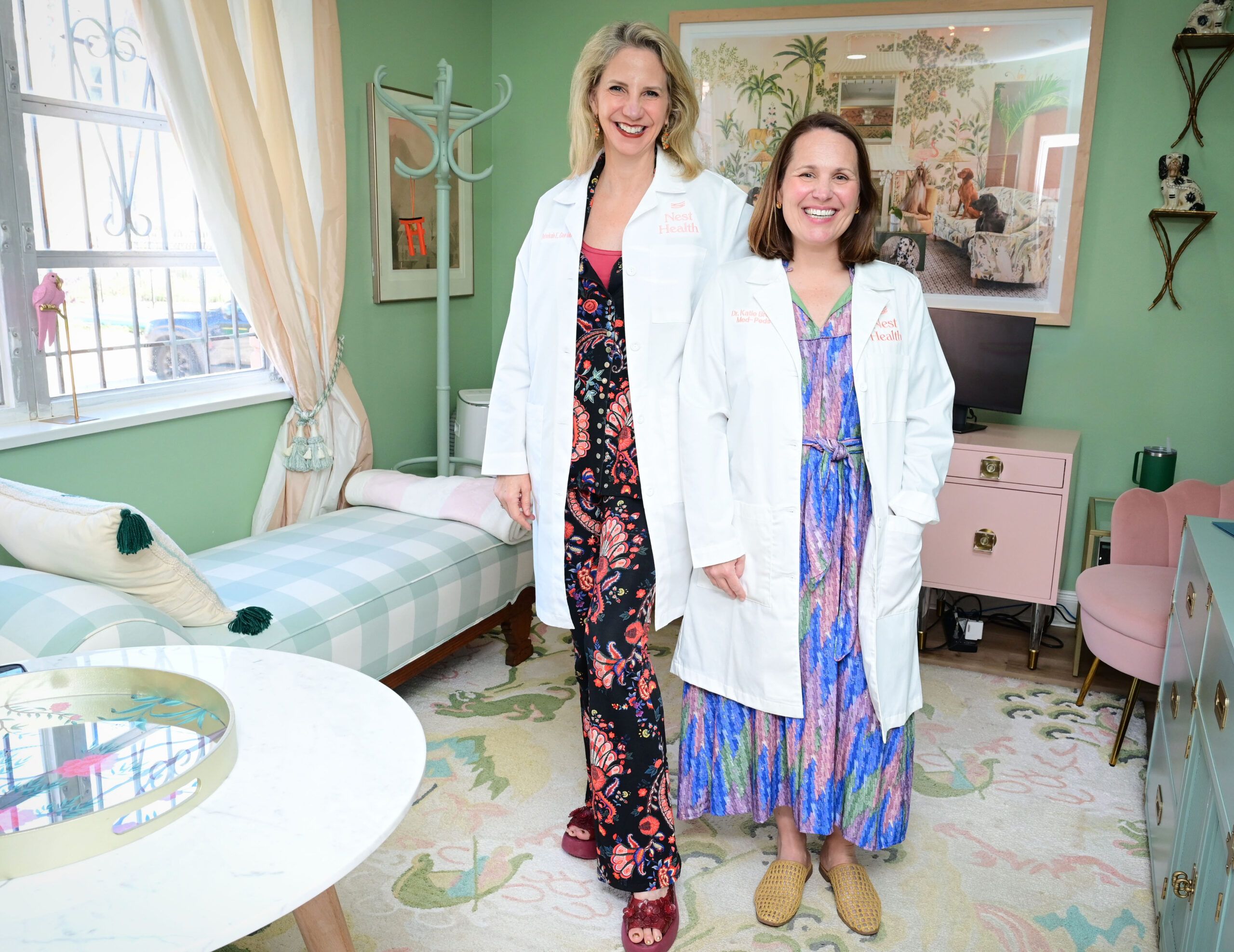
Backed by more than $50 million in funding, Nest Health has rapidly scaled from a modest 2023 patient base to 12,000 patients locally and 18,000 in Arizona, with expansion underway across Louisiana and eight additional states. The company’s growth and early profitability positions its homebased care model for national reach in Medicaid-heavy markets. (Cheryl Gerber photo)

Dr. Katie Brown has a patient who used to visit the emergency room every other day.

As a parent of children with chronic health issues and behavioral challenges, the mother was struggling to keep up with their needs.

Brown connected the woman with Nest Health, an emerging Louisiana-based health care company, for medical visits and meetings with a social worker and a dietitian.

Within six months, Brown says the family’s ER visits were reduced by half.

Brown is a pediatrician and the Louisiana market medical director for Nest Health, which provides in-home, whole-family care to underserved families. Health care is available at no additional cost to those covered by participating Medicaid-managed health plans, according to Nest.

In 2025, Fast Company named Nest to its “World Changing Ideas” and “Most Innovative Healthcare Companies” lists. The company is quickly scaling, targeting markets with high emergency room utilization and populations with limited access to primary care. Nest is betting that reducing avoidable hospital visits can quickly translate into measurable cost improvements—and ease strain on health systems.

The model delivers prenatal, postnatal, pediatric and family care at a patient’s residence, along with mental health resources such as crisis intervention and substance use support.

“There is no clinic,” explains Dr. Rebekah Gee, Nest’s CEO and co-founder. “We come to you in your safe space.”

ON THE RISE: Nest has accumulated more than $50 million in funding and grown to a staff of 71. What was a modest patient base back in 2023 has blossomed to 12,000 patients across the Capital Region and Greater New Orleans today. (ISTOCK/MARTIN-DM)

FILLING ACCESS GAPS

Gee, a New Orleans obstetrician/gynecologist, co-founded Nest Health in 2021.

She wanted to build a program that would provide better medical support to under-resourced parents. She drew from her experiences as former secretary of the Louisiana Department of Health, where she led the expansion of Medicaid. She also pulled from her role as a mother to five children.

She recalls what a process it was to take her then-newborns—and herself—to the doctor after she had twins: Loading her babies into a car, bringing them to a medical facility, risking that they might get sick from exposure to ill patients.

She can empathize with mothers who are reluctant to visit a doctor’s office.

“With Nest, you don’t have to pack up your baby. We help you with lactation in the same room where your own equipment is,” she says. “We can look at where your baby’s sleeping. We can look at the home environment.”

Nest has accumulated more than $50 million in funding and grown to a staff of 71. What was a modest patient base back in 2023 has blossomed to 12,000 patients across the Capital Region and Greater New Orleans today.

In June 2025, Nest launched in Arizona, where it now serves 18,000 patients statewide. Next, it’s pursuing expansion across Louisiana and in eight additional states.

“We are profitable in the Louisiana market, and we expect to be profitable in Arizona later this year,” Gee says.

The company is positioning the Bayou State as an early proving ground for a home-based primary care model designed to scale across Medicaid-dominated markets nationally.

As of 2024, 33.9% of Louisiana’s population was enrolled in Medicaid—the fifth highest in the country—according to the Centers for Medicare & Medicaid Services. More than half of the state’s youth is covered by the program, including 54% of children and 64% of births, per data published by the Kaiser Family Foundation in 2025.

“Louisiana is the state that needs Nest the most,” Gee says. “We’re proud to be here.”

A DIFFERENT MODEL

Nest works with managed care entities to identify parents and children who are not receiving primary care. The aim is to reach children who are missing out on hearing, vision or developmental screenings and to find mothers without postpartum support and parents relying on the ER as primary coverage.

During a house visit, a medical provider and an assistant team up to greet patients at their front doors. The Nest team arrives ready to perform exams, draw labs and administer vaccines or medications. Households can also utilize behavioral and mental health screenings and treatment, when needed.

“We cannot ensure healthy babies if we don’t have healthy moms prior to pregnancy. We can’t ensure healthy families if we don’t have a healthy social environment. We can’t ensure that children are thriving if mom and dad don’t have the proper mental health support,” Gee says.

Brown has treated mothers and children who have not seen a doctor in years. Transportation barriers, rigid work schedules and prior medical experiences often keep caregivers away. Some dread piling their kids into city buses and riding to a crowded clinic.

Evening and weekend options allow flexibility for the entire family to be seen at once. A phone line is available 24/7.

Nest is embracing the AI era. Telehealth usage by physicians has nearly tripled nationally since the pandemic, according to the American Medical Association. Automation and telehealth tools will only broaden reach as Nest expands beyond its current geographic limits—particularly into rural areas, Gee says.

Nest has streamlined the traditional doctor visit format—and this fresh version also helps providers make deeper connections with patients.

Home visits make it easier for practitioners to identify potential risk factors, like exposure to secondhand smoke, lead or mold inside a building or limited access to food and utilities. Environmental problems often missed in clinics can be identified and addressed.

“There is a very intense level of trust that’s established. Information pours out of people regarding their experiences in medicine and their past traumas,” Brown says. “It definitely allows you to truly advocate for patients.”

Exit mobile version