Home The Community Game changers: The Capital Region in motion

Game changers: The Capital Region in motion

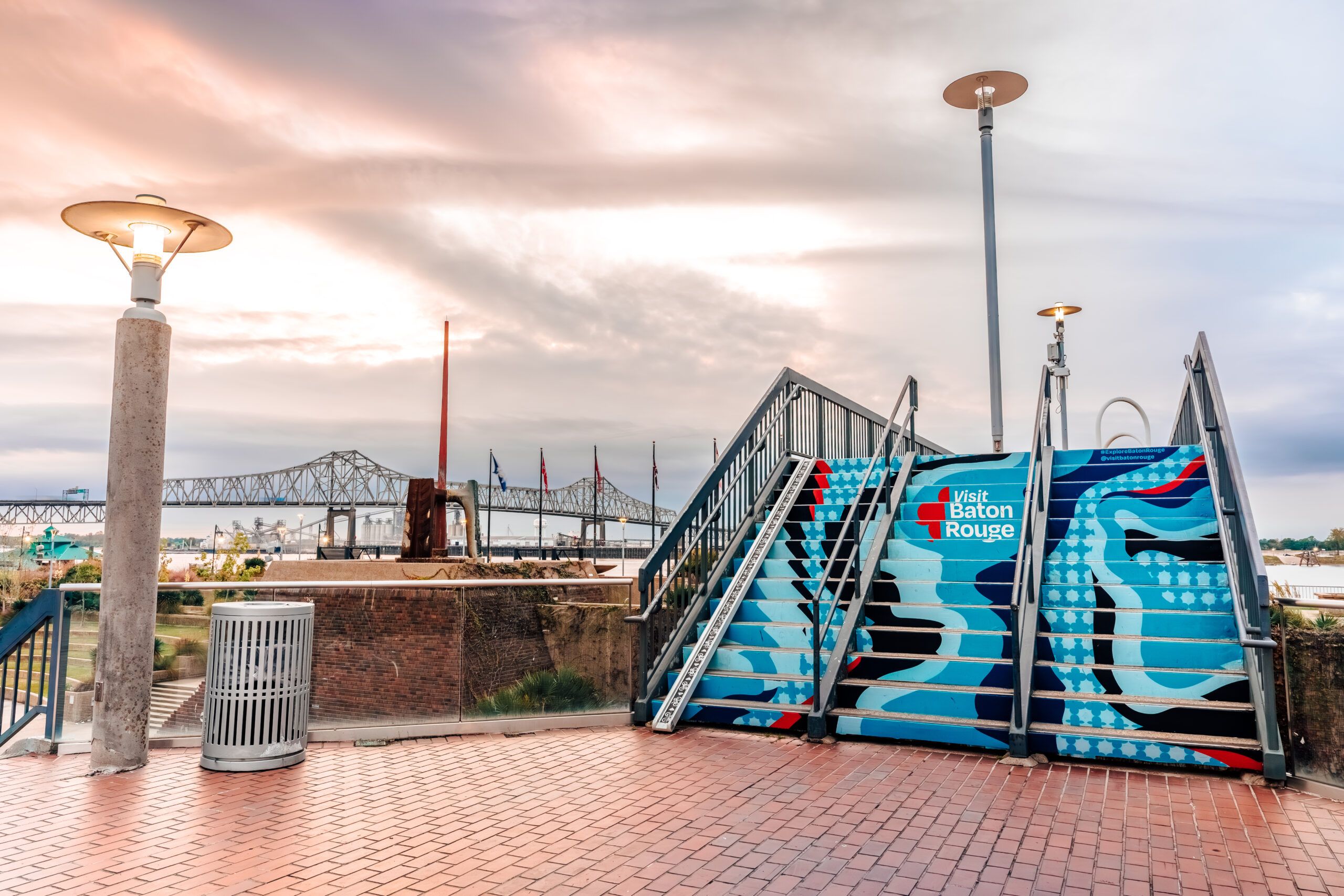
REIMAGINING LIFE ALONG THE RIVER: Plan Baton Rouge efforts have spurred major downtown gathering places such as the Shaw Center for the Arts, Rhorer Plaza and Main Street Market. Now, Plan Baton Rouge III, led by global design firm Sasaki, will guide housing and infrastructure upgrades and explore better uses of the city’s biggest asset: the Mississippi River.

The Capital Region is evolving into a better version of itself. Whether it’s innovative research, landmark health care programs, massive industrial developments or sustainable downtown initiatives, the city isn’t standing still.


Building the Tigers’ next arena

Plans for a new LSU arena in Baton Rouge are moving forward, overseen by the Tiger Athletic Foundation and developer Oak View Group. The $400 million facility is set to replace the Pete Maravich Assembly Center, offering state-of-the-art features and a modern capacity for sports and concerts. A separate but related project will redevelop the River Center to focus on conventions and a new midsize music venue.


Where ideas meet rising tides

(Photo by Collin Richie)

The Water Campus is a 35-acre collaborative research and business campus in Baton Rouge dedicated to coastal restoration and water management. Located along the Mississippi River, it brings together scientists, engineers and professionals to address coastal threats and develop innovative solutions.


From substation to sensation

(Photo by Tim Mueller)

The Electric Depot is a revitalized historic power station in Baton Rouge’s Mid City that has been transformed into a dynamic mixed-use hub. The complex features trendy residential spaces, restaurants, retail shops and an event venue for dining and entertainment.


Amazon rewrites the mall story

Since 2024, Amazon has operated a 3.4 million-square-foot, $200 million robotics fulfillment center at the former Cortana Mall site. The facility is designed to pick, pack and ship smaller customer orders, and its opening has been a clear catalyst for local economic growth. 


A greener way forward

The Downtown Greenway in Baton Rouge is a 2.75-mile network of bike and pedestrian pathways designed to connect parks, cultural attractions and neighborhoods in the downtown area. Initiated as part of Plan Baton Rouge II, the greenway features a mix of new and existing infrastructure, such as bike lanes and sidewalks to provide more active transportation options.


MegaPark, mega potential

The RiverPlex MegaPark is a 17,000-acre planned industrial and mixed-use development site on the Mississippi River in Ascension Parish. The site is ideally positioned to attract large-scale manufacturing and energy companies and is a key part of the parish’s strategy for economic growth.


JuBan Crossing

Juban Crossing has grown from a cluster of big-box stores into one of the Capital Region’s most talked-about corridors, blending shopping, dining and living in Livingston Parish. With national retailers like Barnes & Noble, Old Navy and a planned Target—plus popular restaurants—the development keeps residents closer to home for everyday needs. New apartments and a coming subdivision signal that Juban Crossing is becoming not just a place to shop, but a place to live.


Your new favorite downtown hangout

(Photo by Jordan Hefler)

The East Baton Rouge Parish Library’s River Center Branch in downtown Baton Rouge has quickly become much more than a place to check out books—it’s a vibrant community living room where people of all ages come to learn, create and connect. The four-story, 48,000-plus-square-foot space features a dedicated children’s section, teen tech lab, maker spaces, digital media studio and collaborative workrooms, plus free Wi-Fi and meeting spaces that host everything from author talks to job-help workshops. These offerings help support education, creativity and community engagement in the heart of downtown, reinforcing the library’s role as a cultural hub for residents and visitors alike.


Alternative places to call home

The Capital Region is gaining a wider array of places to call home that go beyond traditional suburbs and subdivisions, with walkable mixed-use neighborhoods like Rouzan and The Settlement at Willow Grove blending residential, retail and dining experiences. Downtown living has also expanded with high-rise residences at Rivermark Centre offering luxury apartments steps from the Mississippi River and urban amenities, while large master-planned communities such as Harveston combine homes, nature and community spaces within Baton Rouge. Ascension and Livingston parishes and surrounding areas continue to grow with new communities and lifestyle-oriented developments.


(File photo)

Spirits rise in Ascension

New investments by SugarField Spirits in Gonzales and Noel Distillery in Donaldsonville signal a diversification in Ascension Parish’s manufacturing base and will likely create a new tourism opportunity.


The foodie glow-up

Once known for an overreliance on chain dining, the Capital Region has transformed into a destination for original, chef-driven restaurants that reflect a broad array of international and local flavors and personality. Baton Rouge hot spots like Elsie’s Plate & Pie—recognized on the Michelin Guide’s 2025 Recommended List—along with destinations like Cocha and BLDG5 have helped anchor that shift, while Ascension Parish standouts such as Library Wine & Provisions and Prairieville favorites Frank’s and Hot Tails broaden the map for food lovers seeking something authentic and memorable close to home.


Nights that bring us together

The Capital Region’s calendar is filling up with grassroots events that bring neighbors together around food, art and culture—from Night Market BTR’s Asian street-festival vibe to White Light Night’s Mid City art scene under twinkling lights. Smaller experiences like Table Story Dinners foster shared meals and storytelling, while farmers markets and pop-ups round out a growing appetite for authentic, community-driven gatherings that make the region feel more connected and culturally rich.


Caring for children, close to home

(Photo by Tim Mueller)

Our Lady of the Lake Children’s Hospital in Baton Rouge has quickly become a cornerstone for pediatric health in the Capital Region, offering comprehensive care tailored just for kids—from routine checkups to highly specialized services with more than 60 pediatric specialists and a dedicated 24/7 emergency department. Opened in 2019 as a frestanding children’s hospital, it’s also the region’s only Level II pediatric trauma center, ensuring critically injured children receive lifesaving treatment close to home rather than being transferred out of the area.


New lights on an old cathedral

(Photo by Jordan Hefler)

Tiger Stadium marked its 100th birthday with a well-earned makeover—bigger video boards, crisper sound and new lighting that make Saturday nights feel even more electric. The upgrades add extra energy to the stands and help Death Valley keep pace with the tech arms race across the SEC, all while preserving the roar, rituals and traditions that make it one of college football’s most iconic venues. It’s still the same Tiger Stadium fans know—just tuned up for the next century of game days.


Big industry, bigger transitions

ExxonMobil’s recent upgrades and Shell’s Project BlueCat highlight how the Capital Region’s industrial corridor is retooling for its next chapter rather than standing still. ExxonMobil has completed a $230.5 million modernization and a $500 million Polypropylene Growth Project that doubled local production capacity, while Shell explores lower-carbon fuels and chemicals through BlueCat. Together, they signal a shift—legacy plants investing to stay competitive and position the region for the future of energy and manufacturing.


The rise of school choice

Charter schools have grown from a small experiment into a meaningful part of the Capital Region’s public education mix, giving families more choices and prompting the system to raise its game. Recent state data shows Baton Rouge charters boosted “high-quality” seats by 19% in one year—adding 2,476 spots so that more than half of charter students now attend top-rated campuses. Supporters point to high performers like BASIS Baton Rouge as evidence of faster gains for some students, while noting charters remain one tool—not a cure-all—for strengthening public education.


Restoring the Lakes we love

(Photo by Miguel Megevand)

The University Lakes Project is reshaping one of Baton Rouge’s most visible landscapes by dredging the silted-in lakes around City Park and LSU to improve water quality, reduce flooding risk and create safer shorelines. Phase one dredging at City Park Lake and Lake Erie is nearing completion, with University Lake expected to wrap by 2026. With new trails, landscaped edges and connections under May Street, the goal is to transform the lakes from a postcard backdrop into an everyday recreational space for walkers, runners, cyclists and paddlers.


The Capital Region’s surprise tech hub

Hut 8’s plan to build a massive AI data center campus at River Bend marks a new kind of megaproject for the Capital Region—one that blends Louisiana’s energy assets with the booming tech economy. The first phase comes with up to $10 billion in investment and more than 200 jobs, backed by a 245-megawatt lease supported by Google and anchored by Anthropic as the main tenant. It positions West Feliciana Parish—better known for forests, farmland and the riverfront—as an unexpected player in next-generation computing infrastructure.


Hyundai’s big bet on Baton Rouge

(Photo by Moment Capsule Photography)

A $5.8 billion investment to build Hyundai Steel’s first North American mill is bringing more than 1,300 new jobs to the Capital Region and enough capacity to produce 2.7 million metric tons of steel a year for U.S. automakers and beyond. It’s the kind of project that doesn’t just add payroll—it plants a flag, positioning the region as a serious player in reshoring supply chains and giving south Louisiana a stronger seat at the table in domestic manufacturing.

This story is part of Business Report’s Capital Assets edition. Get the entire 2026 Capital Assets edition.

Exit mobile version