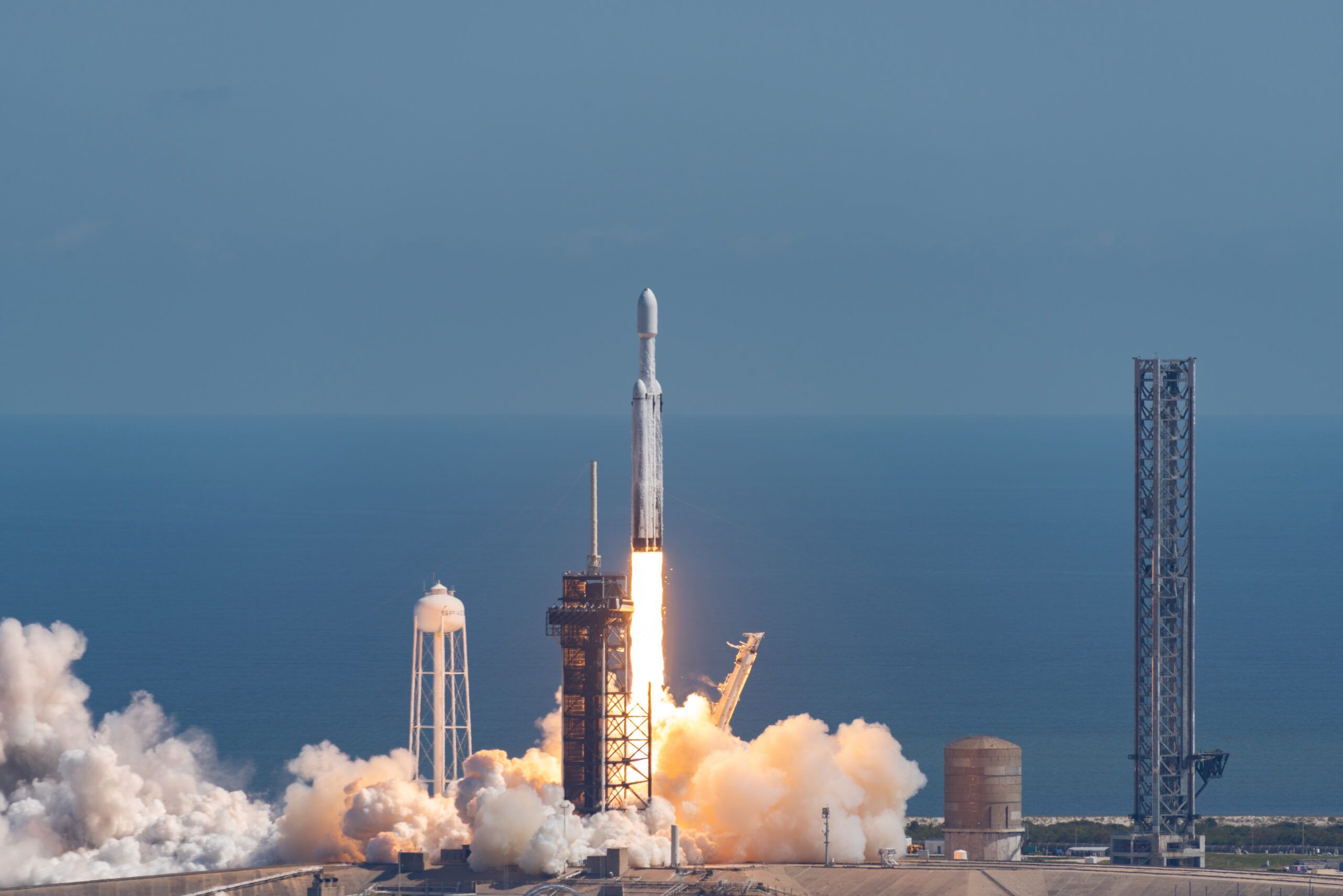
Elon Musk announced plans Wednesday for one of the biggest stock sales ever by taking public a space company that is currently losing billions of dollars a year.
A filing shows that his SpaceX lost $2.6 billion from operations last year on $18.7 billion in revenue, and the losses kept piling up at the start of this year, too.
Rumors have swirled in recent weeks that SpaceX is in talks to acquire 136,000 acres in Vermillion Parish. Those rumors began as Louisiana lawmakers were approving a package of bills that appear to be aimed at positioning the state to land a major aerospace project.
The prospectus did not put a dollar figure on the amount Musk hopes to raise, but various reports have put it at $75 billion or so. An offering of that size would easily surpass the current title holder, Saudi Aramco, the oil giant that went public seven years ago and raised $26 billion.
SpaceX has said the money will help finance projects to put people on the moon and Mars in its quest to make humans an intergalactic species as they face existential threats that could wipe out civilization.
“We do not want humans to have the same fate as dinosaurs,” the filing states.
The prospectus reads in part like a Hollywood fantasy version of the future, detailing in one section how part of Musk’s compensation will be granted only if he maintains “a permanent human colony on Mars with at least one million inhabitants.”
Short of that, the stock sale alone could make Musk, a major owner who founded SpaceX in 2002, the world’s first trillionaire. Forbes currently puts his net worth at $839 billion.
In addition to making reusable rockets to hurl astronauts into orbit, SpaceX has other businesses—some successful, some struggling.
The document shows that Starlink, the world’s largest satellite communications company, is a big source of cash for the company, generating $4.4 billion in operating income last year. The business uses 10,000 satellites in low orbit to provide internet service to 10 million people in 150 countries and territories.
Among the struggling businesses are two Musk units that were recently acquired by SpaceX—his social media platform X, formerly Twitter, and his artificial intelligence business, xAI. Those purchases were blasted by some SpaceX investors as bailouts because they are big money losers. The prospectus said its AI business lost $6.4 billion in operations last year.
The original SpaceX business, making rockets and staging launches, has been helped by massive government contracts. SpaceX has won contracts worth $6 billion from NASA and the Defense Department and other government agencies in the past five years. The company noted in its filing that one-fifth of its revenue last year was from the federal government.
SpaceX will be able to pitch the offering to investors—in what’s known in Wall Street parlance as a “road show”—15 days after making its prospectus public. In this case, that works out to June 4.