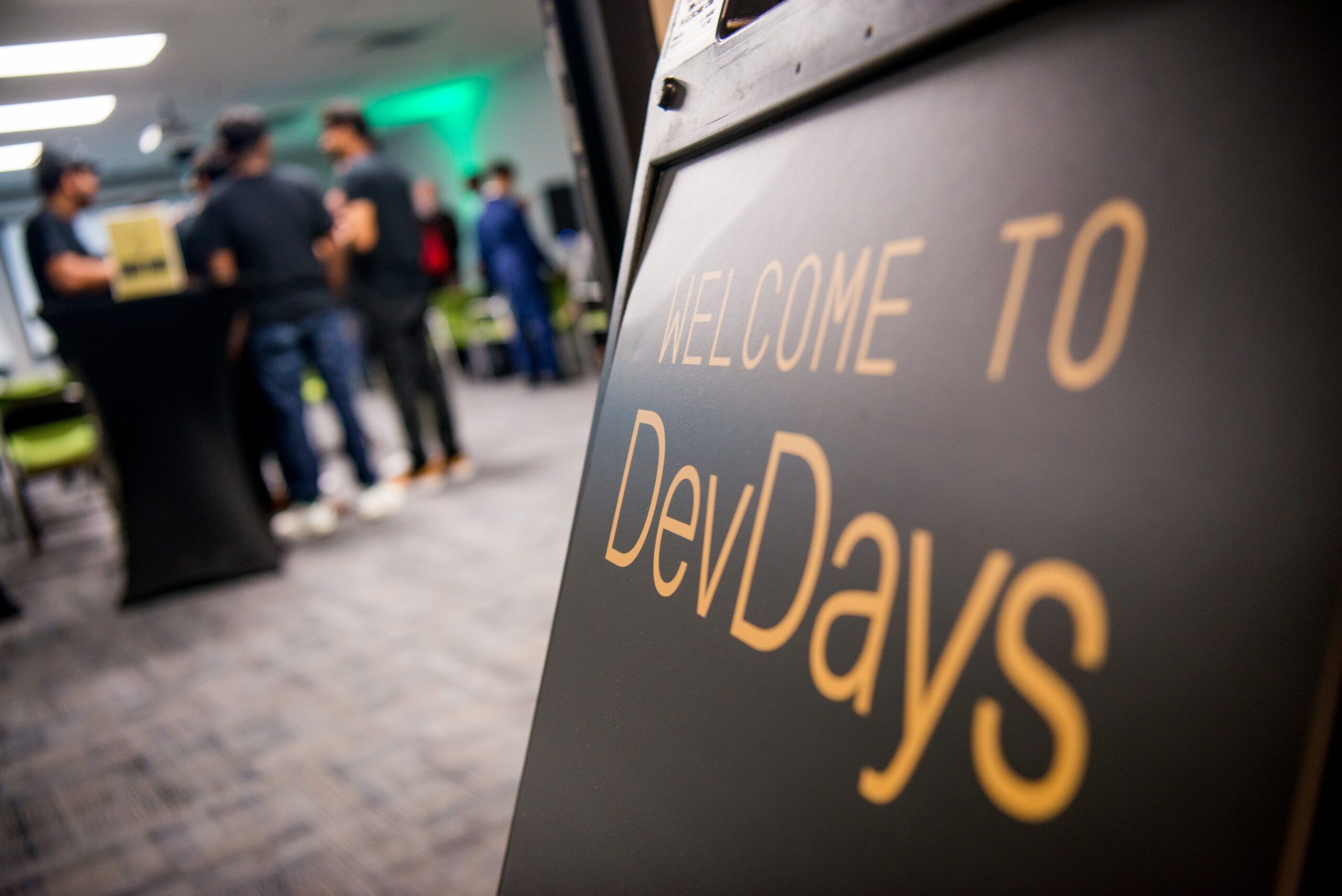
Back in March, 10 small groups of students from Louisiana universities pitched startup ideas in an event hosted by Nexus Louisiana, the state’s technology incubator.
Pitch events were nothing new for Nexus, established by the Louisiana Legislature in 1992, but this one was different. Reimagined in 2025 as DevDays, the session invited teams of college students to propose solutions to a specific Louisiana problem. Each DevDays event has a theme and an industry partner.
“One of the things this does is allow us to demystify the potential of tech,” says Nexus President and CEO Tony Zanders. “Because we can show in layman’s terms how it improves life in Louisiana.”
For the March event, Nexus and The Water Institute asked students how they would use artificial intelligence to improve Louisiana’s open-source dashboard for monitoring bird populations.

Enthusiastic and a little nervous, each student group delivered a 10-minute presentation and tech demo while a panel of judges listened and asked questions. Students from Southeastern Louisiana University won top honors with their Bird
Sense AI, a machine learning platform that classifies bird species from aerial imagery and makes it easier for researchers to use the data for actionable research.
“It was just fascinating to see them work through the problem and approach it from their own lens,” says Beaux Jones, president and CEO of The Water Institute. “All of our jaws were on the floor the entire time. Everything those students built was better than things we see in the market every day.”
DevDays was launched last fall when Nexus, partnering with Ochsner Health, asked students statewide to develop technology solutions for preventing ACL injuries, common among young, female athletes. Future DevDays will tackle other problems, including high insurance rates, obesity, cancer detection and childhood literacy, Zanders says.
The program’s focus on using technology to solve issues impacting Louisiana is straight out of Zanders’ playbook. Appointed to lead Nexus in February 2025, he has rolled out several new initiatives and a fresh direction for the organization, including the Louisiana Technology Cup, an annual competition among both students and nonstudents.
This summer, the organization and many of its startups will move into new digs in downtown Baton Rouge, anchoring what the Downtown Development District has coined the Innovation District.
Earlier this year, Nexus received a $200,000 grant from JPMorgan Chase for a 10-year strategic plan that will be finalized in the fall. The plan will help the organization prioritize its projects, Zanders says.
Founder of the successful tech startup, SkillType, Zanders brings new energy, ideas and enthusiasm to the job. But he’s also fond of saying that he’s following Nexus’ statewide mandate to incubate tech startups and support their founders.
Nexus may be based in Baton Rouge, he says, but its role is to harness ideas and energy across the state. A powerful byproduct is bringing them to the Capital Region.
DevDays and the Louisiana Technology Cup are tidy examples of Nexus’ clear charge, Zanders says. The events replaced Baton Rouge Entrepreneurship Week, or BREW, a long-standing pitch competition hosted by Nexus that welcomed business ideas beyond the tech umbrella. Zanders says he received pushback when BREW was eliminated, but he stood firm on the tech mandate.
“The word ‘entrepreneur’ is nowhere in our statute,” Zanders says. “We’re leaning into the ‘high-tech’ callouts that are our unique responsibility. We’re not looking for the entrepreneur who is starting a new website and a laundromat. We want the one who is reinventing the washing machine.”
The soon-to-open 28,000-square-foot Nexus headquarters will provide an attractive setting for current founders, about 20 of whom are moving from the former Louisiana Technology Park on Florida Boulevard. It will also help lure a new generation of coders and tech visionaries who already exist in Louisiana classrooms, Zanders says. Situating Nexus around walkable amenities will go a long way in appealing to young people.
Nexus will occupy the eighth, ninth and most of the second floor of the centrally located development at 440 on Third. The floors feature private offices for established startups, as well as hot desks and meeting rooms. A “hotel lobby” design on the second floor includes a bar, coffee kiosk and space for working and meeting. The organization is also renting two apartments as a model program that will determine the effectiveness of offering housing to future founders.
“The move downtown feels long overdue,” says Adam Knapp, CEO of Leaders for a Better Louisiana. The former CEO of the Baton Rouge Area Chamber, now the Greater Baton Rouge Economic Partnership, Knapp recalls past efforts to relocate Nexus to downtown that never came to fruition. “It’s a key part of advancing innovation and entrepreneurship in the community and better serving entrepreneurs.”
The headquarters can host 20 to 25 companies. But with hot desks and event space, it will also act as a hub for coaching prospective early-stage founders, including DevDays participants.
“We’re really excited about all the spaces where creative collisions can happen, and where we can have people running into each other doing the work,” says Nexus Chief Administrative Officer Kyle Finke. “I used to work in teacher prep, and you can’t wave a magic wand and create a teacher, and you can’t do that with tech founders, either. You have to help them discover who they are and give them an opportunity to build it.”
One of the other upsides of the space, Zanders says, is its potential to foster economic development in Baton Rouge.
“If you want to build an app or a hardware product, you should be able to come to your state capital and get the coaching, resources and mentorship you need,” he says. “After you train here for six weeks or six months, you can return, or you can stay here to start your business.”
Zanders says one of the biggest challenges in leading Nexus has been in encouraging stakeholders to imagine what’s possible for Louisiana’s tech sector—and being patient in achieving it. “When we look at places like Austin, Columbus, Ohio, and Raleigh-Durham, North Carolina, none of those were overnight projects,” he says. “So for us to realize that potential, we need to set goals over a longer time horizon and manage expectations. The growth we see in the next 12 months will start to compound, year over year.”
While there’s a tendency to value large-scale job creators, like Meta’s $10 billion investment in a Richland Parish data center, Zanders suggests observers think about how the company began.
“Meta started as Facebook in a dorm room 20 years ago, and it wasn’t even Mark Zuckerberg’s first idea. There were 12 others that came before it,” he says. “We want to create an environment where we can find the next Meta.”