The Baton Rouge Gallery, long a cornerstone of the local arts community, is partnering with BREC to plan a new, larger facility that would dramatically increase its exhibition and programming space. The new arts center will likely be erected next to the gallery’s historic home in City-Brooks Community Park.
The effort comes as the gallery marks its 60th anniversary and grapples with the limitations of its current facility.
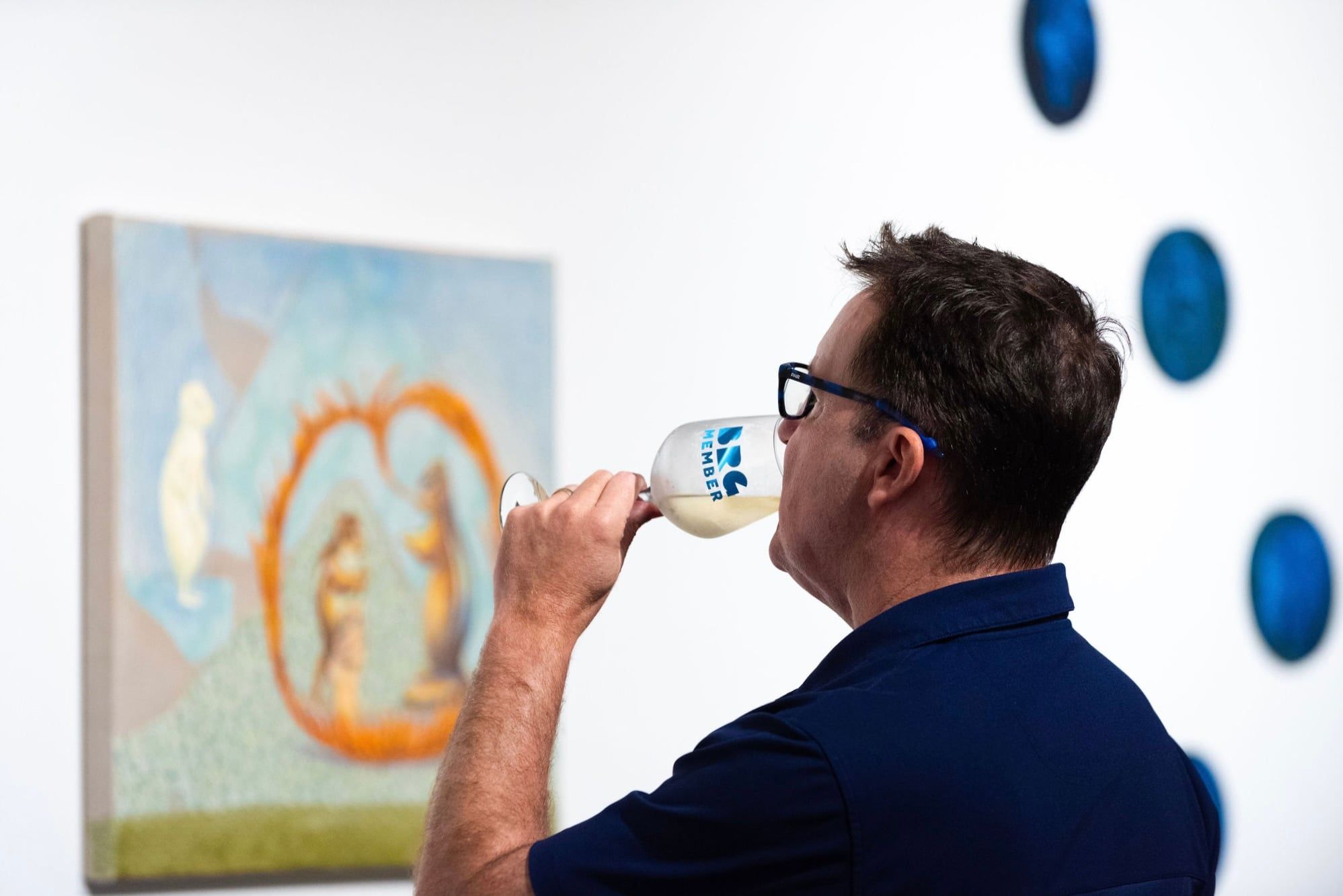
The gallery currently has less than 2,800 square feet of exhibition and programming space, a footprint that has become increasingly strained as attendance has grown. Its monthly First Wednesday receptions routinely draw more than 600 attendees and sometimes draw upward of 750.
“The reality is that we have a lot of space constraints on the amount of programming we can do,” says Jason Andreasen, the Baton Rouge Gallery’s executive director.
The new arts center would represent a substantial increase in scale. Plans call for a facility somewhere in the range of 18,000 to 20,000 square feet, including exhibition space, event space and administrative offices.
The project is still in the early design phase, with BREC having only recently approved a $1.3 million design contract with the New Orleans architecture firm NANO. Spearheading the design are NANO’s Terri Dreyer and Gabriel Smith of New York’s G|S Architects, who have helped design prominent arts institutions across the country, including the Corning Museum of Glass in New York, the Glenstone Museum in Maryland and the North Carolina Museum of Art.
Andreasen says it’s too early to speculate on when construction might commence, or on how much the project might cost in total.
The gallery expects to pursue both public and private dollars to bring the project to fruition.
“The funding itself will surely be something we’ll seek philanthropic support for,” Andreasen says. “It’ll be a diverse mix of funding streams.”
As currently envisioned, the new arts center would not replace the gallery’s historically significant existing structure. Constructed in 1927, the building was originally a pool house for the segregated City Park Pool, which closed in 1963 following the Baton Rouge Swim-In, an effort by local Black activists to desegregate Baton Rouge’s public pools.
Instead, the existing structure is likely to be restored, with a newer addition that Andreasen refers to as the “back gallery” likely to be removed.
“The plan as of today is to essentially restore the original building back to its original quality,” Andreasen says.
In a recent message to supporters, Andreasen described the project as one that would “infuse new energy into the conversation about quality of place in Baton Rouge.”
But Andreasen says the project is about more than just cultural impact, framing the effort as a matter of economic development. An internal study found the Baton Rouge Gallery generated roughly $5.7 million in economic impact for the Capital Region between 2022 and 2024 despite its relatively small footprint.
“One of the things we want to draw attention to is the fact that the arts can be a real economic driver for our area,” Andreasen says.
The Baton Rouge Gallery, BREC and the design team will collaborate with the international planning and design firm Sasaki on the project. Sasaki is currently in the process of drafting a larger master plan for City-Brooks Community Park.